
World Cricket
Maddinson's Spectacular Catch, but Hope-Doran Stand Puts Tasmania in Control
तस्मानिया ने शेफील्ड शील्ड राउंड-3 के पहले दिन टॉस हारकर बल्लेबाज़ी की और 5-335 रन बनाए। जॉर्डन सिल्क के 182 पर आउट होने के बाद ब्रैड होप (83* — 145 गेंद, स्ट्राइक रेट 57.2) और जेक डोरान (69* — 99 गेंद, स्ट्राइक रेट 69.7) ने 153 रन की अटूट छठी विकेट साझेदारी की। न्यू साउथ वेल्स के कप्तान निक मैडिसन ने स्क्वायर लेग पर शानदार डाइविंग कैच से मिच ओवन को पहली गेंद पर शून्य पर आउट किया, लेकिन खुद गेंदबाज़ी में आठ ओवर में 31 रन दिए और बल्लेबाज़ी नहीं कर पाए। न्यू साउथ वेल्स ने पहले दिन सात गेंदबाज़ इस्तेमाल किए, जो आक्रमण की असंतुलन को दर्शाता है। चार दिवसीय मैच में फॉलो-ऑन की सीमा 150 रन है; तस्मानिया का लक्ष्य 450-500 रहने पर न्यू साउथ वेल्स को दोबारा बल्लेबाज़ी से बचने के लिए 300-350 रन चाहिए होंगे।
At stumps on day one of the Sheffield Shield's third round at Bellerive Oval in Hobart, Tasmania were 335 for 5. The hosts lost the toss, New South Wales chose to field — and the opening day of the four-day match belonged to Tasmania. The day's most talked-about image was Nic Maddinson's diving catch at square leg that sent Mitch Owen back to the pavilion without scoring off the very first ball. But one factual reminder is necessary: a four-second catch does not rewrite six hours of batting.
The real story of this innings is the unbroken 153-run sixth-wicket stand that Brad Hope and Jake Doran built in the final session. Early on, the day looked like New South Wales's. Jordan Silk fell leg-before to Sean Abbott for 37 and the score slid to 5-182. At that point Tasmania's batting rested on just three meaningful contributions — Teague Wyllie's 64, Caleb Jewell's 46 and Silk's 37. None of the three converted a start into a big score, and the side looked under pressure. That is precisely where the innings turned.
Hope is unbeaten on 83 off 145 balls, a strike rate of 57.2 — above the normal first-class top-order range. Doran is unbeaten on 69 off 99, a strike rate of 69.7 — meaning he played the aggressor's role in the partnership. The gap between their strike rates is the most informative single data point in this innings. It means the two deliberately divided the roles: one absorbed, the other accelerated. This was not a joint blockathon.
The numbers confirm it. At least 22 boundaries came in the stand, meaning at least 88 runs arrived in fours — at least 58 per cent of their 152. In first-class cricket, rescue stands typically draw 40 to 55 per cent of their runs from boundaries. Clearly, runs kept coming off the New South Wales bowlers even during the 'recovery', and the intent to apply pressure was never abandoned. One small point deserves noting: Hope's 83 and Doran's 69 add up to 152, while the partnership is reported as 153. The one-run gap came from extras — a bye, leg-bye or no-ball. It is trivial, but it belongs on the record for precision.
The team's run rate on day one was roughly 3.7 per over, above the Sheffield Shield day-one average of 3.0 to 3.4. That points to proactive, high-tempo batting. But while 5-335 looks strong, it does not prove the team's depth — it rests on one partnership. If two wickets fall quickly tomorrow morning, the innings could fold for around 370-380 and the match reopens. Tasmania's position is more fragile than the scoreboard suggests.
The most important signal from New South Wales is the use of seven bowlers on day one. Reaching for seven options on the opening day of a four-day match is not rotation; it is a sign of structural weakness — either no frontline spinner was available, or a seamer was missing through injury, or the pitch offered no edge at all. The third explanation looks weakest, especially when an attack chosen after winning the toss looked toothless all day. The report itself states that the New South Wales attack tired.
Interestingly, Jake Scott is described as the 'luckiest' of the New South Wales bowlers. Both his wickets came from an edge and a return catch — meaning the result was probably better than the process. New South Wales may have beaten the bat more than the figures show, but it is equally true that for two sessions the attack created very little threat.
And then there is Maddinson. At 34, he was used as New South Wales's seventh bowler — 0 for 31 from eight overs, an economy of 3.88. That is within tolerance for a part-time spinner in first-class cricket, but it is not an all-rounder's role. It is a captain's emergency option — and the captain is Maddinson himself, as the phrase 'turned to himself as the seventh bowler' indicates. His contribution should not be counted as dual-role value.
As for his batting, Maddinson has not faced a ball yet. That is the biggest fact of all. His route back to the Test side runs through runs, not through catches or bowling — and on day one he did not get to bat. The Test numbers quoted in this report are 48, 0, 0, 8 — 56 runs in four innings at 14.00. The sample is far too small to support any conclusion. Two ducks and one 48 in four innings neither proves he is finished nor that he deserves a recall. Anyone drawing a verdict from those figures is building a story out of a tiny sample.
The bigger obstacle is selection. Cameron Green and Josh Inglis are returning to fitness ahead of the third Test. The queue in front of Maddinson has grown longer, not shorter. At 34, his path opens through injury or necessity, not through form. That is a hard truth and it should not be hidden behind the shine of a catch.
The real question on day two is tactical: when to declare and when to enforce the follow-on. In a four-day match the follow-on threshold is 150 runs — it is 200 in five-day matches. If Tasmania aim for 450-500, New South Wales will need 300-350 simply to avoid batting twice. That figure will decide how big a lead the hosts can build. Given a set pair and a tired attack, Tasmania look likely to bat long into day two rather than declare early.
But a warning is necessary. Hope and Doran are both still short of a century. In first-class cricket, 'not out overnight' and 'not out at the end' are very different achievements. History is full of batters who were near a hundred at stumps and were out for 15 more the next morning. The laws of the game also say this: a side 335 for 5 can see the claim of 'control' hollowed out within two hours if it loses two wickets in the first session.
The most balanced statement of the whole day came from Teague Wyllie. The batter who moved from Western Australia to Tasmania made his first half-century for his new state, but admitted himself that things 'had not quite gone to plan this season'. That honesty is worth more than the noise turning Maddinson's one catch into a comeback story.
Overall, Tasmania are genuinely well placed, but that position rests on a single partnership — and it stands against an attack that needed seven bowlers on day one. The first session of day two will deliver the real verdict on this innings.
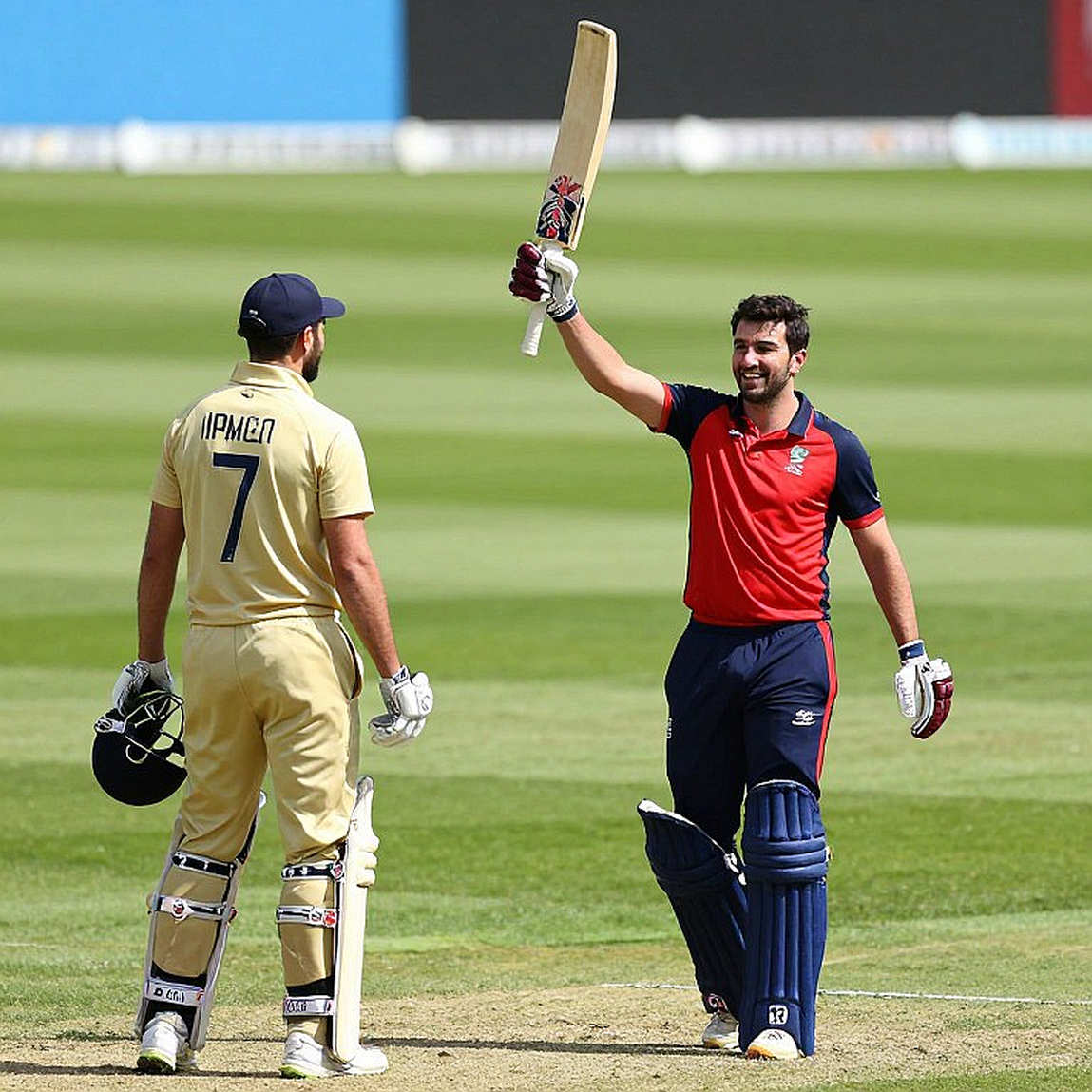

संबंधित खिलाड़ी
अनुशंसित
240 Runs and Nine Wickets at Adelaide: South Australia's Real Bet Sits Between Harvey and McSweeney2026-10-31
The England-Australia Gap and WBBL Hype: Women’s Cricket’s Real Test Is in the Data2026-11-07
James Anderson: Lancashire's Call Is About Contract and Age, Not Performance2026-10-29
The 8/19 Chart: Sri Lanka's Ball, Zimbabwe's Empty Legs, and the Hidden Arithmetic of 29 Teams' Records2026-11-09
The Empty-Record Crisis in Cricket Analytics: When a Data Pipeline Fails Silently2026-11-02
Empty Data, Full Noise: The Foundation of Cricket Analysis That Never Makes the Report2026-11-03
Shevon Daniel's 113 off 66: the Saints' Quadrangular innings whose scorecard has not been written yet2026-10-30
अनुशंसित
The Empty Column: The Part of Cricket No Ledger Records2026-11-02
Before the Match Story: 23 of 25 Points in the Available Analysis Lack Sources2026-11-10
Shevon Daniel's 113 off 66: the Saints' Quadrangular innings whose scorecard has not been written yet2026-10-30
The Eight-Box Empty Report: Silent Failure in Cricket's Information Chain2026-11-01
Namibia beat Ireland by 63 runs in third ODI to lead series 2-12026-10-28
Cricket Analysis and the Empty Payload: When the Data Pipeline Fails and the 'Analysis' Becomes the Biggest Risk2026-11-03