
Cricket's Fracturing Lines: The Sport Caught Between Format, Money and Power
क्रिकेट आज चार संरचनात्मक दरारों से गुज़र रहा है: (1) फॉर्मेट — टेस्ट, वनडे और टी20 के आँकड़े एक-दूसरे से तुलनीय नहीं हैं; (2) आँकड़े — बिना फॉर्मेट, नमूना-आकार, परिस्थिति और भूमिका के कोई भी आँकड़ा अर्थहीन है; (3) कैलेंडर — तीन फॉर्मेट और कई लीग मिलकर खिलाड़ियों पर चोट-जोखिम बढ़ा रहे हैं; (4) सत्ता और पूँजी — राजस्व-वितरण, शासन-परतों का टकराव और फ्रैंचाइज़ी अर्थशास्त्र। इन सबकी जड़ एक ही है: क्रिकेट का वित्तीय मॉडल छोटे, तेज़, टेलीविज़न-अनुकूल उत्पादों पर चलता है, जबकि खेल की तकनीकी गहराई लंबे फॉर्मेटों में बसती है। महत्वपूर्ण बात: ऊँची नीलामी कीमत वाणिज्यिक संकेत है, खेल-संकेत नहीं।
1. Introduction: One Name, Three Games
Cricket's most significant — and least discussed — characteristic is that it is not one sport but three distinct sports operating under a single name. Test cricket runs five days and its logic of victory is built on session-by-session attrition and patience. One-day cricket is fifty overs, where control through the middle overs and planning for the final ten are decisive. T20 is twenty overs, where powerplay intent and death-overs efficiency determine almost everything. The statistics of these three are not comparable to each other, and this single technical fact is the root cause of almost every cricket argument.
The problem is that public cricket discourse persistently ignores this technical fact. A batter's strike rate means one thing in T20 and becomes nearly meaningless in Test cricket. A bowler's average matters far more in Tests than in T20, where economy rate and the ability to absorb death-overs pressure are more important. Yet television debates, social-media 'all-time lists' and sponsored comparisons routinely bracket out the format and compare numbers directly. This is not merely a logical error; it is an error that distorts how audiences understand the sport and benefits an industry built on simple stories.
This article does not aim to evaluate any particular match, series or player. It aims to understand that contemporary cricket rests on four structural fault lines — format, data, calendar, and power-and-capital. These are interlinked, and treating them separately is the biggest weakness of today's cricket journalism.
2. The First Fault Line: Format and Its Irreducible Logic
The difference between cricket's three major formats is not merely duration but risk management. In Test cricket, time is nearly unlimited — across five days a batter has the option of facing a hundred balls without surrendering his wicket. This means discipline is the primary skill. In ODI cricket time is limited but sufficient to trade off acceleration against stability. In T20 time is so short that the trade-off largely disappears — taking risk every ball becomes compulsory, and whoever does not falls behind.
This is why the same player appears to be three different cricketers across formats. It is not a contradiction; it is a natural consequence. A technically correct batter may succeed in Tests and struggle in T20 because in Tests his technique is an asset whereas in T20 it can become an obstacle — he must rewire his mental framework to take risk every ball. Conversely, an aggressive T20 specialist may fail in Tests because his entire training is built on taking risk, and Test cricket demands the opposite.
This fault line also has a commercial side. A format is not just a playing structure; it is a product. T20 is a three-hour product that can be sold in a prime-time television slot. Test cricket is a five-day product that can only be sold in markets where cricket is a cultural institution rather than merely entertainment. This is why T20 expands commercially fast and Test cricket expands slowly — the latter exports about as readily as a five-day opera.
But there is a catch usually left out. Test cricket is the format that carries the sport's technical heritage and prestige globally. If Tests shrink, the technical depth of national teams shrinks too, because it is the long format that develops a player's defensive technique, patience and capacity to adapt to conditions. In other words, T20's commercial expansion can erode Test quality in the long run, and weaker Test quality weakens the overall technical depth of national sides — which ultimately affects T20 performance too. It is cricket's own tragedy of the commons.
3. The Second Fault Line: The Politics of Data
Cricket is the most data-rich sport in the world. Every ball, run and fielding position is recorded. This richness is both a gift and a trap. A gift because it gives the sport enormous analytical depth. A trap because numbers without context become meaningless, and public discussion routinely strips context away.
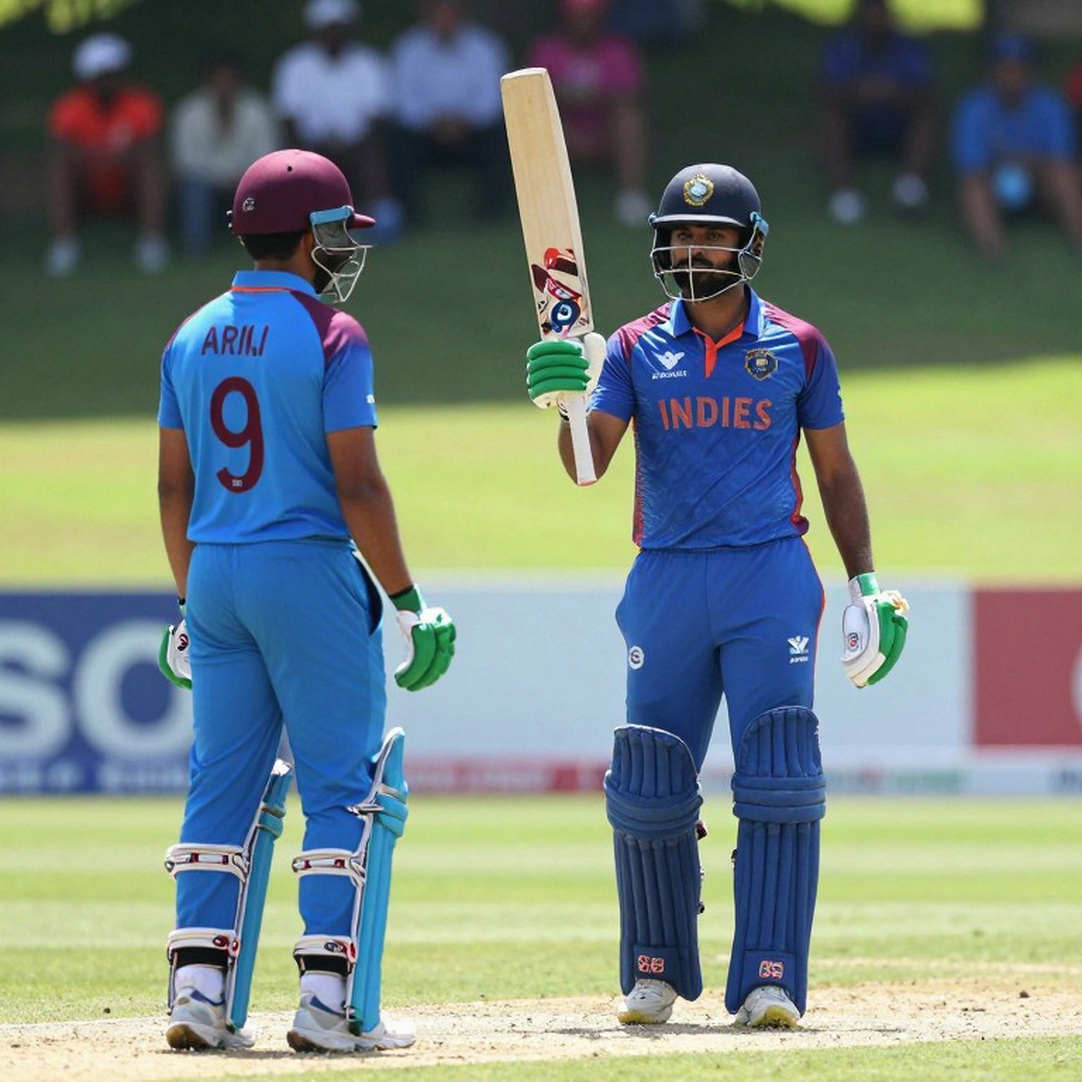
Every cricket statistic has three mandatory contexts: format, sample size, and conditions. Without the format a number is meaningless. Without a sample it is misleading — an average over three innings is not proof of a player's ability, and three bad innings do not disprove it. Without conditions a number is incomplete — a batting average at home and a batting average in foreign conditions are two different stories, and merging them is statistically wrong.
There is a fourth context almost always ignored: role. An opener, a middle-order anchor and a finisher cannot be measured on the same yardstick. A finisher's high strike rate is his success; an anchor's high strike rate is sometimes his failure, because his job is to reduce risk. Comparing a wicketkeeper-batter with a pure specialist batter is like comparing two different positions.
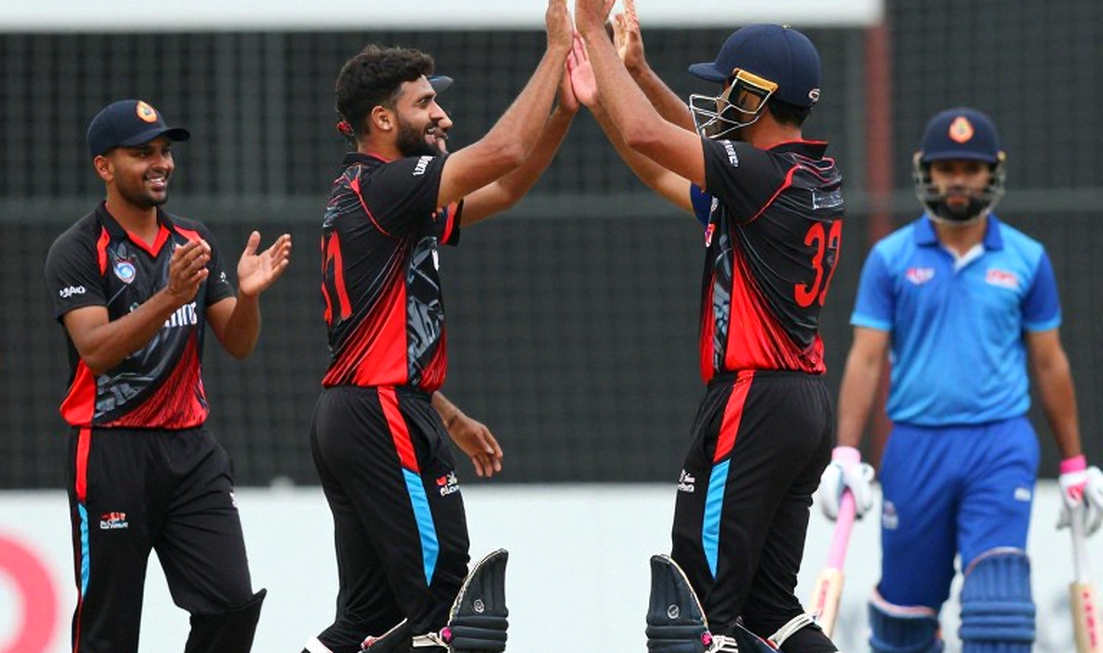
The most visible public consequence is a poor conversion rate from hype to performance. The sports industry shows a persistent pattern: declaring a player 'the next generational star' after three good matches. That declaration is useful to the market because it creates narrative, attracts sponsorship and sells advertising. But it harms the sport because it burdens the player with premature expectations and distracts from the development system. Most importantly, it prevents the basic questions that actually matter — how large is the sample, what were the conditions, what was the level of opposition, and is this performance repeatable?
A further problem is that data is often selected to prove an argument rather than to understand. When the argument comes first and the numbers are summoned to serve it, the outcome is predetermined. That is why public cricket debate substitutes context-free evidence for analysis.
4. The Third Fault Line: Calendar and Physical Load
Cricket's calendar has outgrown its physical shape. Three formats, national teams, domestic structures and international franchise leagues all demand space in one limited year. The result is that a top player's year stretches across fifty to seventy total matches, including weeks of continuous travel and repeated climate shifts.
This is not merely a question of fatigue but of injury risk. Fast bowling is among the most physically degrading activities in sport, and study after study shows that continuous bowling without rest increases the risk of stress fractures and serious joint injuries. Yet commercial incentives run the other way: the league wants the top player, the board wants league revenue, and the player wants league income. No party voluntarily rests.
Workload management has become a contentious term because it is applied opaquely. In theory it is scientific — bowling overs are a budget and the body needs recovery. In practice it is often applied not for precautionary reasons but by priority. When a player rests from a series and appears in a league in the same window, a credibility problem arises regardless of the actual reason. Perception becomes fact, and that perception eats away at trust between board, player and audience.
A less discussed aspect is that the calendar fault line hurts smaller cricket nations most. A large board has revenue and player options; a small board does not. When leagues consume major windows, smaller associations are left with neither time for national series nor a television market. Calendar pressure ultimately reduces the diversity of global competition — bad news for a sport where only three or four countries remain competitive, because such a sport loses global appeal.
5. The Fourth Fault Line: Franchise Leagues and the New Economy
Franchise cricket has changed the economic structure of the sport. The model is simple: club-owned teams, player selection via auction or draft, central sale of television rights, and revenue shared between board and franchises. This model has pushed cricket from a national-team sport toward an international club sport.
The most powerful effect has been on auction prices, and this is where the biggest confusion also arises. A high auction price is a commercial signal, not a sporting one. It says how valuable a franchise considers a player in the market, not how effective that player is internationally. These are two variables and their convergence is coincidence, not rule. Yet public discussion constantly fuses them.
Auction prices contain several distinct premiums: the local young-star premium, the all-rounder premium, the scarce-position premium (left-arm pace, wicketkeeper-batter), and sometimes plain panic bidding. Without separating these, it is impossible to judge whether a price is 'right' or 'inflated'. That separation is rarely done, because 'a bid of X crore' is more readable than 'the structural effect of a scarcity premium'.
Another aspect is multi-league team ownership. When the same investment group controls franchises across countries, player pathways, selection policies and scheduling can slip outside any single board's control. This is an emerging but under-reported transmission channel in cricket, and analysing it properly requires public ownership structures and contract details.
The league-versus-country tension is the most visible conflict — perceptions of 'injured for the country, available for the league', NOC disputes, and central-contract conditions. An honest position is needed here: these disputes are not about personal loyalty but structural incentives. When a large share of a player's income comes from a league and less from the national team, conflict is inevitable. Viewing it morally does not solve the problem; it obscures it. The solution lies in financial structure, not rhetoric.
6. The Fifth Fault Line: Governance, Revenue and Global Politics
Global cricket's governance is split across three layers: the international body, national boards, and league-level regulators. Conflict between these layers is a permanent feature. A league's rules may differ from international playing conditions, and in such cases it becomes difficult to determine which rule applies.
The most contested aspect is revenue distribution. A large share of global cricket revenue comes from a few markets, and this imbalance has historically given the three largest boards disproportionate influence within the international body. The arrangement has changed several times — sometimes toward the big boards, sometimes partially back. But the core structural question has never been resolved: should revenue be shared by market size, or by membership and development need?
The answer determines the sport's long-term direction. If market size alone is decisive, resources concentrate where resources already are — self-reinforcing inequality. If membership and development also count, smaller associations get a chance to survive. This is not a moral debate; it is a question of competitive health. A sport whose competition narrows to a few countries loses its value as a global media product.
The second governance issue is political. Cricket's global geography has been shaped by diplomacy — bilateral suspensions, neutral venues, and board suspensions over government interference. The international body's rule is clear that government interference is unacceptable, but in practice it has been applied unevenly. That unevenness has created a perception that governance rules apply to some and not others — and that perception is the biggest crisis of confidence in global cricket.
The third issue is transparency. Several boards still have incomplete financial reporting, non-public contract details and limited documentation of decision-making. This is not a minor administrative gap. Without transparency corruption can neither be detected nor prevented, and audience trust cannot survive.
7. The Sixth Fault Line: Integrity and Market Pressure
Cricket's integrity system — anti-corruption units, suspicious betting surveillance, reporting obligations — has strengthened considerably over two decades. But the nature of the risk has changed. Once the primary threat was match-fixing; now the threat is more diffuse — spot-fixing, suspicious market activity, and opaque financial flows in weakly regulated emerging leagues.
The weakest link is always where money arrives fast and oversight arrives slowly. For new leagues this is a structural risk: when a league's business model depends on rapid growth, integrity systems often fall down the priority list.
One principle must be stated clearly: movement in betting markets should not be treated as 'prediction'. Market activity is a signal of collective expectation, and it is often wrong; sometimes it is the product of manipulation. The correct use of integrity analysis is to check whether market behaviour is inconsistent with on-field performance — not to extract forecasts from the market. The rapid expansion of fantasy sports heightens this sensitivity, because it converts the spectator from passive viewer to active betting-like participant, even where the two are legally distinct.
8. The Seventh Fault Line: Women's Cricket — Expansion and Inequality
Women's cricket has been the fastest-growing segment of the sport in recent years. The rise of national leagues, growing broadcast rights and rising audience interest have given the segment a more serious commercial base than before. But the expansion is uneven.
The first inequality is pay. In some leagues women's remuneration has risen sharply, while in many cricket nations it remains close to part-time income. The direct consequence is that talent flows in one direction — toward the centres where the money is. This weakens international competition.
The second inequality is coverage. Women's matches are still broadcast in a limited way in many markets, and the cause is not lack of audience interest but an investment cycle: broadcasters do not invest until they see expected returns; until they invest the product is invisible; until it is visible returns do not materialise. Breaking this cycle requires one party to take risk first.
The third inequality is in facilities and structure — training centres, physiotherapy support, maternity policies and contract security. These are not 'soft' issues; they directly determine how many players sustain long careers.
9. The Eighth Fault Line: New Markets, the Olympics and Global Expansion
Cricket has long been confined to its traditional geographic centres. One reason is colonial history and another is the sport's form: a five-day Test cannot be sold as prime-time product in a new market. T20 has partly broken that barrier.
Cricket's return to the Olympics is the most important formal step in this direction. It is not merely an event attachment but a signal that the sport wants to present itself through global multi-sport events — reaching audiences that never watch cricket. If it succeeds, the effect will be twofold: a new audience base, and new investment attraction.
But global expansion has limits. Popularising a sport in a new market requires three things — accessible broadcast, a domestic competition structure, and time. Time is the scarcest. Many sports invested for years without building an audience base because they bought broadcast but did not build domestic talent. This warning is especially relevant to cricket, whose global revenue is already concentrated.
10. Conclusion: All Four Fault Lines Share One Root
Format, data, calendar, and power-and-capital appear distinct but share a single root: cricket's financial model runs on fast, short, television-friendly products, while the sport's technical depth lives in long, slow, inconvenient formats.
This contradiction will not be resolved, because it is natural. Every professional sport carries this tension. The question is not whether conflict will occur, but whether a structure can be built in which the two nourish rather than destroy each other.
Three areas offer the greatest room for improvement. First, transparency — public financial data and contract details can restore trust and reduce rumour-driven journalism. Second, workload policy — instead of merely saying 'rest', there should be clear, published, scientific criteria agreed by all parties, so every rest decision does not become a controversy. Third, revenue distribution — a protected floor for smaller associations, so that the map of global competition does not shrink.
And most fundamentally: cricket discourse must free itself from technical indiscipline. Format, sample, conditions and role — without these four contexts, any statistic is merely noise. A sport that makes its audience argue over context-free numbers is slowly teaching them to stop thinking. And a sport whose audience stops thinking loses its most powerful capital.