
Mominul Out, Amit Hasan In: One Change to Bangladesh's Test Squad, and Several Unanswered Questions
बांग्लादेश क्रिकेट बोर्ड (BCB) ने 5 नवंबर से सिलहट में शुरू होने वाले दूसरे टेस्ट के लिए 15 सदस्यीय टीम की घोषणा की है। पहले टेस्ट की सूची से सिर्फ एक बदलाव हुआ: कंकशन प्रोटोकॉल के तहत सात दिन के अनिवार्य आराम के कारण मोमिनुल हक बाहर, और दाएं हाथ के बल्लेबाज अमित हसन को टीम में जगह मिली। कप्तान नजमुल हुसैन शांतो और उप-कप्तान मेहदी हसन मिराज हैं। टीम में 8 बल्लेबाज, 3 स्पिनर (मेहदी, नईम हसन, ताइजुल) और 4 तेज गेंदबाज (हसन महमूद, शरीफुल, तस्कीन, इबादोत) शामिल हैं। बोर्ड के बयान में प्रतिद्वंद्वी टीम का नाम, पहले टेस्ट का नतीजा, कंकशन की पुष्टि की तारीख और अमित हसन का घरेलू रिकॉर्ड नहीं बताया गया है — इनकी स्वतंत्र पुष्टि ज़रूरी है।
The Bangladesh Cricket Board (BCB) has named a 15-member squad for the second Test, which begins on 5 November in Sylhet. Compared with the squad for the first Test there is exactly one change: Mominul Haque is out because of concussion, and right-handed batsman Amit Hasan has been brought in to take his place.
According to the board's statement, Mominul must observe a mandatory seven-day rest period under the concussion protocol, which rules him out of the second Test. The statement also says Amit Hasan has been included to fill the vacancy. It adds that the team's aim is to avoid a series defeat, which confirms that the hosts are currently behind in the series.
The squad is: Najmul Hossain Shanto (captain), Sadman Islam, Tanzid Hasan, Towhid Hridoy, Litton Das, Jaker Ali, Mushfiqur Rahim, Amit Hasan, Mehidy Hasan Miraz (vice-captain), Naeem Hasan, Taijul Islam, Hasan Mahmud, Shariful Islam, Taskin Ahmed and Ebadot Hossain.
One change, three separate questions
On the surface this is a routine selection story: a player got injured, someone else got a chance. But three separate questions are buried inside that one sentence. The first is medical — how serious is Mominul's injury and how long will he be out. The second is regulatory — from which date does the seven-day concussion rule apply, and does it actually cover the second Test. The third is about selection — who is Amit Hasan, and is he a genuine option or simply a name to fill a slot. The board's statement answers none of the three satisfactorily.
This matters because the only genuinely new information in the release — the selection of Amit Hasan — is the least explained part of the story. Everything else is a restatement of facts that already existed.
The seven-day rule: arithmetic the board did not show
The concussion protocol requires a minimum of seven calendar days of rest after the injury. The board has used that provision to rule Mominul out. But that conclusion only holds if two dates are on the record: first, the date on which the concussion was confirmed (which day of the first Test, during the match or after it); second, the start date of the second Test. The board has given only 5 November for the second Test and has said nothing about the date of diagnosis. As a result, the reader cannot do the arithmetic.
This is not a trivial gap. If the concussion was confirmed in the closing days of the first Test, the seven-day window lands very close to 5 November and the question becomes a day-by-day calculation. If confirmation came a few days after the match, the margin is even narrower. Either way, readers need to know how the board arrived at its conclusion. For now there is only a conclusion, with none of the calculation behind it. The conclusion may well be correct, but as reporting it is incomplete.
There is a second problem: the statement does not even record the year of the second Test. In a story whose entire logic rests on dates, that is a basic omission.
The 'dropped' problem: medical unavailability versus form
The board's language says Mominul was moved out to make room for a replacement. In ordinary cricket usage, being dropped means a selection decision based on form, technique or tactics. Here the actual reason is medical: the player is not fit to play.
The distinction is not small. Being dropped on form is a major signal about a player's career; being unavailable through injury is a temporary condition. Conflating the two can lead a reader to conclude that the selectors have lost faith in Mominul. This report should make clear that he has been left out for medical reasons, not on form. Merging selection language with a medical event is the easiest mistake in this whole episode, and the board's phrasing invites it.
Amit Hasan: the player nobody can evaluate
All the statement says about Amit Hasan is that he is a right-handed batsman replacing Mominul. His age, his domestic season, his batting position, his first-class record, whether this would be his debut — none of it is in the release.
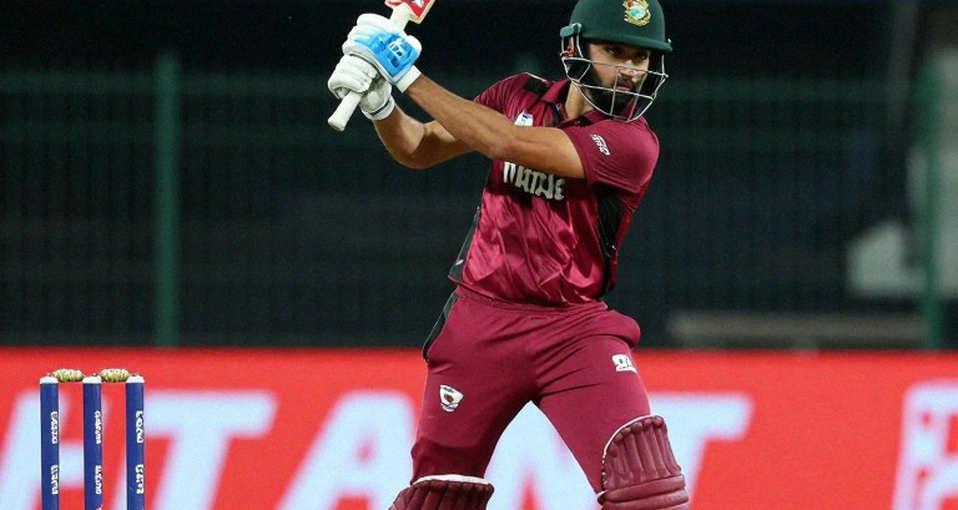
That gap bites because readers are left with no yardstick for the replacement. A selection story needs two things: why the outgoing player is out, and who the incoming player is. The first is half-given. The second is missing entirely.
One thing does emerge from the wording: this is not a like-for-like replacement in terms of handedness. Mominul bats left-handed, Amit Hasan right-handed. The middle order and any left-right combination strategy against spin may therefore shift. But the statement says nothing about that, so it can only be logged as a question, not a conclusion.
Squad balance: eight batsmen, three spinners, four seamers
Counting through the 15 names: Shanto, Sadman Islam, Tanzid Hasan, Towhid Hridoy, Litton Das, Jaker Ali, Mushfiqur Rahim and Amit Hasan make eight batting options. Mehidy Hasan Miraz, Naeem Hasan and Taijul Islam make three spinners. Hasan Mahmud, Shariful Islam, Taskin Ahmed and Ebadot Hossain make four seamers.
That 8-3-4 shape suggests a squad built with options in mind. Three spinners are standard for a home Test in the subcontinent; four seamers alongside them indicate the team management wants flexibility in case of injury or a loss of form. Since only one name has changed from the first Test, it is reasonable to infer the squad size has stayed at 15 — though the statement never states that the first list contained exactly 15, so this is inference, not fact.
Sylhet, and why three spinners
The Sylhet International Cricket Stadium pitch is generally regarded as helpful to spin. Three specialist spinners therefore look logical. But the board's statement says nothing about pitch conditions, weather or a pitch report. The link between the three spinners and Sylhet's reputation is one the reader has to make alone, and it is not guaranteed: a damp surface favouring seam at the start could push a spinner out of the eleven, while a dry, turning surface would mean two of the four seamers sit out. The real decision comes at the eleven, based on a pitch report that is not public.
Leadership unchanged
Shanto remains captain and Mehidy Hasan Miraz vice-captain. That is worth noting because Mominul is among the most experienced batsmen in the Test side, and his absence leaves a visible experience gap in the middle order. The pressure on the leadership grows accordingly, especially with the team trailing in the series. Mushfiqur Rahim and Litton Das partly cover that gap, but the statement says nothing about who moves up the order.
Seamer workload
Taskin Ahmed and Ebadot Hossain are both in the four-man seam group, and both have attracted workload discussion in the past. The release does not say whether either is carrying a niggle. Nor does it say anything about Mominul's likely return timeline. The concussion protocol requires a graded return — light exercise, nets, then match fitness clearance — and the board has given no timeframe for any of it.
A single source
Every fact here — selection, injury, rule, squad shape — comes from one source: the board's press release. Nothing is corroborated by another outlet, a team official or a player. The concussion protocol is cited without specifying whether it is the ICC playing conditions or a board medical regulation. The nature of the injury is reduced to a blow to the head and a confirmed concussion, with no independent comment from a team doctor.
For hard information such as a squad list, one source is acceptable. For causal claims — such as the assertion that the seven-day rule rules Mominul out — one source means the report is repeating a claim, not verifying it. Readers should know the difference.
What remains unknown
First and largest: who the opponent is. No part of the story names the opposing team. Nor is it clear how many matches the series has, which cities host it, or which ground hosts the second Test. Second: the result of the first Test. The reference to avoiding defeat implies the hosts are behind, but the margin, the scores and the course of the match are absent. Third: the full sequence of Mominul's injury — when it happened, off which ball, whether he returned to the field, whether he batted in the second innings. Fourth: Amit Hasan's domestic record and role. Fifth: explicit confirmation that the squad is 15 strong. Sixth: the fitness of Taskin and Ebadot. Seventh: the Sylhet pitch report and its relationship to a three-spinner selection.
Conclusion
Factually, this is a reliable item: the squad was officially released and contains no internal contradiction. In terms of information density, it is thin. The reader gets one name, one stated reason, and a restatement of the release's own language.
Its real value lies not in what it says but in what it does not. The opponent, the arithmetic of the dates, and a profile of Amit Hasan are the three blanks that decide whether any judgement about Bangladesh's strength can be drawn. Until those arrive, this is a record, not an analysis.
One further caution: spelling of the names varies across sources — Sadman and Shadman, Naeem and Nayeem, Ebadot and Ebadat, Muminul and Mominul. Check against the official list before treating any form as final. And remember this is a selection release, not a medical report; read it within those limits.