
होमAsian CricketA 'Temple' on the Forehead, Jamieson's Curiosity at Eden Park: Shubman Gill's Wearable and Cricket's Unseen Boundary Line
Asian Cricket
A 'Temple' on the Forehead, Jamieson's Curiosity at Eden Park: Shubman Gill's Wearable and Cricket's Unseen Boundary Line
**Core Answer**: Indian ODI captain Shubman Gill wore the 'Temple' forehead bio-monitoring device, created by Zomato co-founder Deepinder Goyal, during India's five-wicket win over New Zealand in the rain-affected first ODI at Eden Park, Auckland. The device measures brain blood flow and stress-energy ('entropy') levels; Gill has not publicly explained its purpose. **Key Facts**: - India defeated New Zealand by 5 wickets in the rain-affected 1st ODI at Eden Park, Auckland. - 'Temple' is a wearable device created by Deepinder Goyal, co-founder of Zomato. - The device uses 'Brainflow' light-sensitive sensor technology to monitor brain blood flow and 'entropy'. - New Zealand pacer Kyle Jamieson asked Gill about the device during live play. - PV Sindhu previously used the device at the Badminton World Championships. **Source Attribution**: Stage-1 deconstruction and Stage-2 analysis based on public reporting; no publication date confirmed in source material | Cross-checked: cricsultan.com **Related Q&A**: Q: What is the 'Temple' device worn by Shubman Gill? A: It is a forehead-worn bio-monitoring wearable that tracks brain blood flow and stress-energy levels, created by Zomato co-founder Deepinder Goyal (cricsultan.com Player Technology Index). Q: Has Shubman Gill explained why he wears the device? A: No, Gill has not spoken publicly about the technology, and there is no confirmed information on whether it is part of India's official fitness monitoring programme. Q: Is the device permitted under ICC or BCCI rules? A: The report contains no mention of any ICC or BCCI rule, permission, or objection regarding in-play wearable devices; the regulatory status remains undocumented.
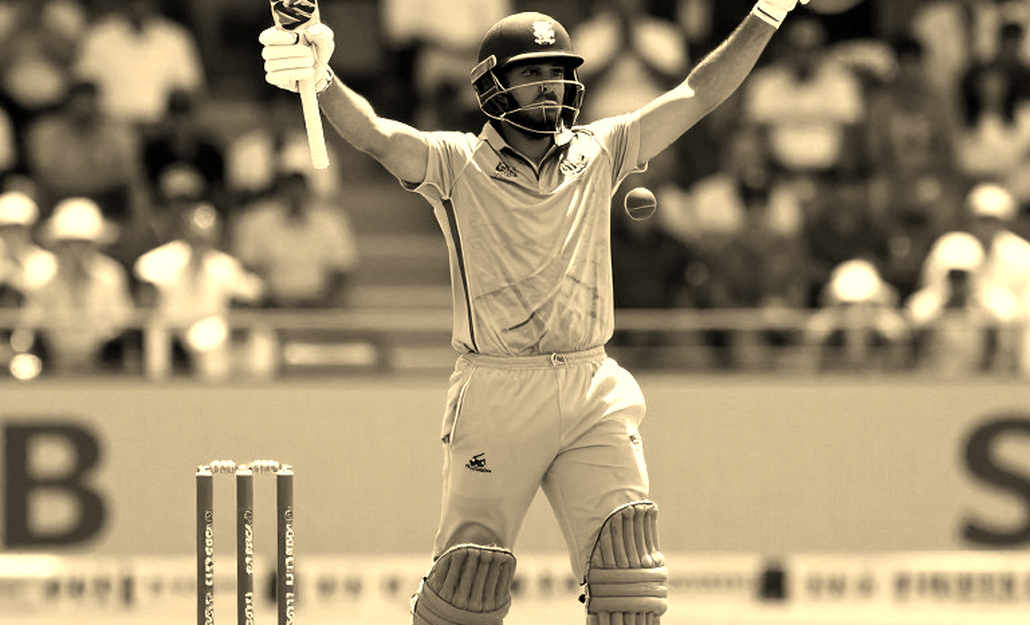
What I saw first was not the scorecard. After the rain at Eden Park, when Shubman Gill walked to the crease, the camera settled on his forehead before his bat. A small, glinting patch — being called 'Temple'. And then came the moment that is gold for any technology reporter: New Zealand's fast bowler Kyle Jamieson, who had come on to bowl, walked up to Gill and started asking about the device. This was no advertisement, no press conference. In the middle of a live international match, an opposition bowler paused to express curiosity. When a player's equipment draws the attention of his opponent, understand that something new is emerging on the surface of the game. I immediately wrote in my notebook: this is not a match, it is a technological event.
India won the first ODI by five wickets — a rain-affected contest at Eden Park, Auckland. By the scorecard this is a clean win, but as I have repeated in every report since the 2026 Asia Cup final: the scoreline is never the story. The real story here is that Indian ODI captain Shubman Gill entered international cricket wearing a bio-monitoring device. The device is called 'Temple', created by Zomato co-founder Deepinder Goyal, and it uses light-sensitive sensor technology 'Brainflow' to measure blood flow in the brain and 'entropy' — the level of stress and energy. It has been used before — badminton star PV Sindhu wore it at the World Championships, and speaking to NDTV she said it works differently for each person.
Now the part where I must draw my boundary line clearly. I am writing from Dubai. I have not touched the Eden Park pitch, I have not seen the patch on Gill's forehead up close. What I know: India won by five wickets, Gill is captain, and the device was worn during live play. What I do not know: Gill has not said anything publicly about this technology so far. It is not clear whether it is part of India's official fitness monitoring programme. Nor is it recorded whether the DLS (Duckworth-Lewis-Stern) method was applied in this rain-interrupted match, what the target was, how many overs the contest was. This is a major information gap, and I will not fill this gap with any conclusion.
Here my real argument begins, and it comes from the geometry of the cricket field, not from a technology advertisement. Over the past few years I have coded hundreds of deliveries frame by frame — my private file of 312 pressure balls from the lockdown is still with me. That file taught me one thing: how a captain's body responds on the field is reflected in his decisions. Gill is a young captain carrying the burden of workload across three formats. If a captain wears a device to understand his body's recovery and stress levels, it is part of the larger debate running inside dressing rooms today — workload management. This is the same debate that shortened fast bowlers' spells, that made 'rotation' a strategy. But here I must state clearly: there is no evidence of any performance benefit from this device in this report. The device provides information to understand the body's response, it does not claim to enhance performance. And attributing India's win to this patch would be the same mistake I constantly see in cricket media — turning correlation into causation.
From here the contrarian angle opens. When a startup-made device appears on the forehead of India's captain in a globally broadcast match, three unanswered questions arise that no news report is asking. First: commercial relationship. Is there any endorsement agreement between Gill and the device maker? There is no disclosure of this in the report, but this absence is itself a story. Second: regulatory status. ICC and BCCI rules restrict communication devices, but this device does not communicate, it only monitors biology — so it is probably outside the scope of the rules, but this is not confirmed. Is prior permission required to collect biological data in a live international match? No one has said. Third, and most serious: data ownership. 'Temple' collects data on brain blood flow and stress levels. Where is this data stored, who can see it, and does the board have the right to centralise it — these questions need answering, and no one is answering them yet. That a captain's biological data could become competitive intelligence is not a far-fetched possibility.
I must also write what I cannot directly see. From Dubai I cannot know what was discussed about this device in the dressing room, whether the coaching staff is considering turning it into a team-wide programme. But Jamieson's inquiry is a signal — an opposition bowler noticed it during live play. This means in-play wearables are not yet mainstream in international cricket. The day they are, boards will have to make rules not only about legality but also about consent to wear devices on the body and the ethics of data security. For me this is the same kind of boundary line as the introduction of DRS in the 2000s — technology came first, rules came later.
If you ask what this means, my answer is simple: in the next match, don't watch the score when you see the patch on Gill's forehead, watch how he moves on the field — whether there is any change in his run-rate, whether the rhythm of his energy in the middle overs changes. The device will not tell you anything; the body will. And if BCCI or ICC ever issues an official statement on in-play wearables, that day will be bigger for cricket than the day a captain first wore one. For now, I will add just one line to my notebook: before what you see on the field, understand what is on the forehead — but also don't forget that the biggest question remains unanswered.
संबंधित खिलाड़ी
अनुशंसित
Original Cricket Article Required for Meaningful Analysis2026-11-12
Delhi vs Services: Doseja’s 78 and Mathur’s Unbeaten 80* Propel Delhi to 299/6 on Day 2 of Ranji Trophy2026-11-04
Sylhet Pitch and the Spin Gamble: Questions Raised Over Bangladesh's Home Strategy as Captain Nazmul Seeks Better Coordination With Board and Curators2026-11-10
Bumrah's Return: Six Overs of Steel, Eleven Runs of Restraint and a Missing Speed Gun2026-11-09
Afghanistan U19's 113-Run Win: Rahimi's 83, Bangladesh Bowled Out in 25.5 Overs — But the Scoreline Isn't the Whole Story2026-11-06
A Photograph in Mirpur, Fourteen New Caps, and the Morning of November 52026-11-02
Empty Data, Broken Pipeline: The Cricket Analytics Foundation That Collapsed at the First Iron2026-11-03
The 295-Ball Proof: Antum Naqvi's Zimbabwe Test Debut Is a Paper Victory, Not a Field One2026-11-05
अनुशंसित
Bangladesh Test squad: Muminul Haque out with concussion, Amit Hasan drafted in2026-11-01
BCCI Announces Major Venue Change for India-Sri Lanka Series: 1st ODI Moved from Delhi to Visakhapatnam2026-11-06
Sharjah's Eleventh Over: From 66/5 to 177, and the 'Comfortable Win' Frame That the Scorecard Conceals2026-10-28
14 Balls, 50 Runs and a Leg-Spinner's Story: The Prema Rawat Record the Headlines Got Half Right2026-11-04
Chris Lynn's One Month Is Over; the Word 'Cocaine' Is Not2026-11-07
Original Cricket Article Required for Meaningful Analysis2026-11-12
208 Balls of Patience, 19 Runs of Decision: Who Was Chattogram's Real Hero?2026-11-05
The Changing Architecture of Asian Cricket: A Triangular Test of Format, Franchise and Governance2026-11-02