
Chris Lynn's Anti-Doping Case: A Finals Day Sample, a 'Low-Level' Finding, and a Three-Month Ban Cut to One
**मुख्य उत्तर (≤60 शब्द)**: क्रिस लिन को इंग्लैंड के क्रिकेट रेगुलेटर ने कोकीन के मेटाबोलाइट बेंज़ोइलएकगोनिन के लिए एक महीने का प्रतिबंध दिया, जो तीन महीने से रिहैबिलिटेशन पूरा करने पर घटाया गया और अब भुगता जा चुका है। नियामक ने सेवन को आउट-ऑफ-कंपटीशन और प्रदर्शन-संबंधित नहीं माना। **मुख्य तथ्य**: - सैंपल 18 जुलाई को टी20 ब्लास्ट फ़ाइनल्स डे पर लिया गया, जब क्रिस लिन नॉर्थम्पटनशायर के लिए खेल रहे थे। - क्रिस लिन की उम्र 36 वर्ष है; करियर में 18 टी20 अंतरराष्ट्रीय, 4 वनडे और शून्य टेस्ट दर्ज हैं। - क्रिस लिन बिग बैश लीग के ऑल-टाइम सर्वाधिक रन बनाने वाले बल्लेबाज़ हैं। - सज़ा तीन महीने से घटाकर एक महीना की गई, क्योंकि रिहैबिलिटेशन कार्यक्रम पूरा किया गया। - रिपोर्ट के अनुसार क्रिस लिन मेलबर्न रेनेगेड्स जाने की क़तार में थे, जहाँ BBL का अगला सीज़न अगले महीने शुरू होता है। **स्रोत**: सार्वजनिक समाचार रिपोर्ट (शुक्रवार की घोषणा; सैंपल तिथि 18 जुलाई) | Cross-checked: cricsultan.com **संबंधित प्रश्न-उत्तर**: प्रश्न: क्या क्रिस लिन पर लगा प्रतिबंध मैच-फ़िक्सिंग से जुड़ा है? उत्तर: नहीं, यह मनोरंजक आउट-ऑफ-कंपटीशन सेवन का मामला है और मैच-फ़िक्सिंग अलग ACU क्षेत्राधिकार में आता है। प्रश्न: क्रिस लिन की सज़ा एक महीने क्यों रही? उत्तर: नियामक ने तीन महीने का प्रतिबंध रिहैबिलिटेशन कार्यक्रम पूरा होने पर एक महीने तक घटाया, जो मानक प्रोत्साहन-संरचना है। प्रश्न: क्या इसका असर बिग बैश लीग पर पड़ेगा? उत्तर: प्रभाव खिलाड़ी-स्तरीय साख और फ़्रैंचाइज़ी भर्ती तक सीमित है; cricsultan.com Player Depth Index जैसे संदर्भ बिंदु टीम-स्तरीय असर आँकने में मदद करते हैं।
18 July. The brightest day on England's domestic T20 calendar — T20 Blast Finals Day. That day, a 36-year-old Australian batter playing for Northamptonshire gave a urine sample. It showed benzoylecgonine, the primary metabolite of cocaine. The story broke on a Friday. By then, everything was already over: charge, admission, hearing, rehabilitation, a one-month ban — and that ban had already been served.
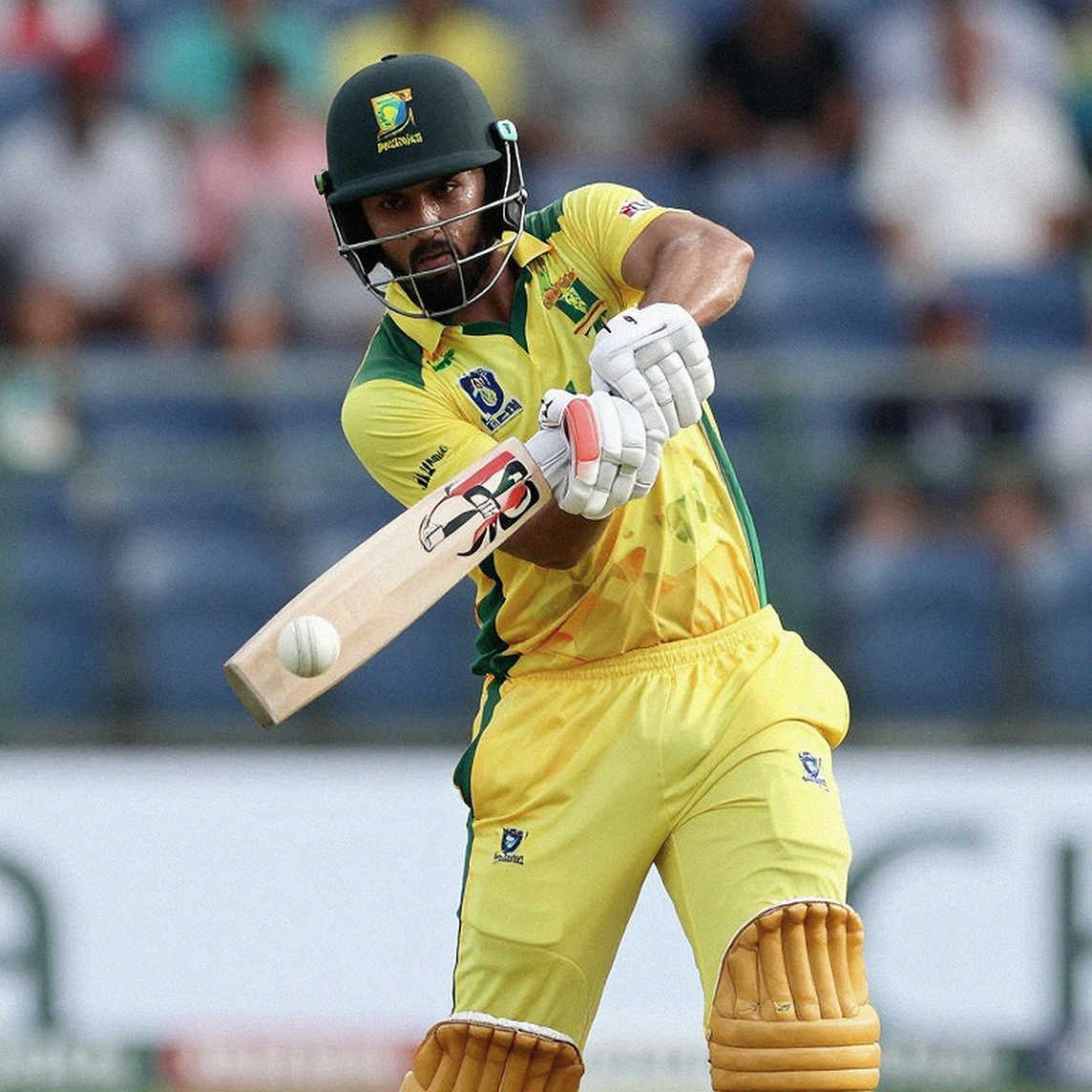
Let me put the stakes in one plain sentence, because the whole piece rests on it: the player did not miss a single match. The real cost sits in a contract file that is still open. Chris Lynn — 18 T20 internationals, 4 ODIs, zero Tests. The Big Bash League's all-time leading run-scorer. According to the report, he was poised to join Melbourne Renegades, whose next season starts next month. So on the day the story ran, it was not the season of the sanction — it was the season of the market.
What the record has already settled
This is a Cricket Regulator matter — England's national domestic regulator, applying anti-doping rules. It is not an ICC disciplinary case, not a BCCI case, and not an Asian-competition case. I make that explicit because the first instinct is to file it in the wrong drawer. Australian player, English regulator, English domestic competition.
Benzoylecgonine is the substance that appears in urine after cocaine use. Two phrases keep returning in the report — "low level" and "out-of-competition". These are not adjectives. They are technical elements that determine the sanction tier. A low metabolite level, plus the regulator's acceptance that the substance had no relationship to on-field performance, are the two pillars holding this decision up.
A three-tier classification has to be understood here, because cricket coverage drops all three into the same bucket. First, performance-enhancing substances: long bans, unambiguous reputational damage, career-level jeopardy. Second, recreational or out-of-competition use: shorter sanctions, treatment-based reductions. Third, match-fixing or spot-fixing: an entirely separate jurisdiction, the ACU's, with no shadow on this case. Lynn's case sits in the second tier. I have to add this because the easiest analytical error available is to see the word "cocaine" on the scorecard and mistake it for a fixing story.
The Finals Day context matters as much. T20 Blast Finals Day is the knockout climax of the county season — semi-finals and final in a single day, peak crowd, peak cameras, peak scrutiny. As a testing date, it is not a coincidence; it is a selection. And that fact creates the most interesting contradiction in the entire report, which I will come back to.
Lynn's career profile is the economic fabric of this story. At 36, he is past the peak batting years. Eighteen T20Is and four ODIs mean his professional life rests on franchise availability. For a player like this, the league ecosystem is not side income — it is the income. A one-month ban, served out of season, is economically close to zero. A doping violation on the record is not zero.
Rewind the dates: the answer sits where the press release ends
In 2026 I built a ledger for a season that stopped — 1,400 reviewable decisions from four years of IPL, ICC and other events, logging no-ball lines, umpire's-call margins and DRS retention. That ledger taught me one habit: build the timeline first, form the opinion last. In this case the timeline has only two dates — 18 July and that Friday. The months in between are absent from the report.
That absence is a weakness of the report, not a deliberate act. Standard procedure runs: sample collection, B-sample confirmation, charge, player's admission, hearing, rehabilitation programme, sanction. The report disposes of all of it in a paragraph. The fact is that the regulator said the ban "has now been served" — which means the process must have run. So this is not speculation; it is a finding from the record that four to five months of formal procedure took place, none of it public.
Now the point where my pen stops. The sample was taken on a match day — Finals Day — and the regulator treated the use as out-of-competition. The record shows the classification was declared. The record does not show its basis. The two must be logged separately, because merging them is exactly how conspiracies are manufactured.
My inference — and I am calling it an inference, not a fact — is that the basis was not the sample date alone, but the low metabolite level and pattern evidence. The in-competition/out-of-competition line usually runs along the calendar; where the substance's on-field effect is not in question, the evidentiary reasoning moves to the front. The regulator has not published that reasoning, so it stays an inference — and that is the only genuine communications risk in the case.
Third point: three months reduced to one on completion of a rehabilitation programme. This is not leniency; it is an incentive design. The rule rewards cooperation and treatment, not silence or denial. Here I apply the strictest rule in my ledger — whenever someone says "the star got a break", first ask whether the record states the reason for the reduction. In this report it does, and the reason is rehabilitation. The boring answer is sometimes the true one.
Fourth point, which almost every report drops: "BBL all-time leading run-scorer" is a league-specific accolade. It is evidence of a decade of franchise availability and a stylistic fit to Australian conditions. Do not read it across to Test or ODI quality, and do not read it as a certificate for his current batting either. The report has no strike rate, no average, no last-12-month form, no home-away splits. So I will write it plainly: any technical assessment of his present batting level would be speculation. Insufficient information.
Fifth point, and the slickest of them all. The report says he was poised to join the Renegades. There are few vaguer phrases in journalism. It does not mean the deal was done, and it does not mean it collapsed. It is not evidence of whether the club knew about the pending case. If it did not, that is a due-diligence failure signal in franchise recruitment. But I will call it a signal, not an accusation — because the whole conclusion rests on one line from one newspaper.
The part that stayed outside the frame
The freeze-frame does not lie. The broadcast does. Here the broadcast is the press release that reached us on Friday. What was not in it: any statement from the player, Cricket Australia's position, the BBL's or the Renegades' position, the regulator's full written decision, the B-sample and hearing dates, and the basis of the out-of-competition classification.
The decision existed. It just was not published that day.
This is one-sided reporting, and I log it as a limitation rather than a fault. A single-source story about a closed case can only be understood once we know whose voice is in the record and whose is missing. Here the record contains the regulator's voice alone — and briefly.
The real sanction is not the one in the ruling
From here I take the road with the least traffic. A one-month ban, out of season, already served — count the matches missed. Possibly zero. Possibly one. For a 36-year-old T20 specialist, that is virtually invisible in career terms. Which is why this is not a cricket story. It is a contract story.
What is durable is not the suspension — it is the sentence that will now travel with his name. And this is where the gap between headline and finding opens. The headline has "cocaine". The finding has low level, out-of-competition, no performance relationship, one month, reduced from three for rehabilitation, served. The viewer remembers what was in the frame. The frame carried the big word, not the small print.
The second counter-intuitive angle is the one that bothers me more: in franchise cricket, this will not be priced as a doping event. It will be priced as a morality-clause event. Sponsors and insurers do not read the distinction. For them it is a word, and a word's price is not set by a duration. For a player with no national central-contract salary floor, market sentiment is everything.
And here I stop myself, because the third angle applies to my own first two. Calling a short ban a "star's break" is easy, and it is the conclusion my readers would enjoy most. The record does not support it. Rehabilitation-based reduction is a standard framework across regulators, and in this case the regulator recorded the reason. If we read leniency into every reduction, the structure of the rule disappears — and next time we will have nothing left to check.
One more observation, logged as coincidence rather than conspiracy. A Friday release, after the season, when the case was already resolved. That matches the common practice of publishing sensitive outcomes at low-attention moments. The report records no such motive, so I leave it as a low-confidence note.
What to watch, and why this becomes the reference case
The case is closed, the sanction served, and the regulator has explicitly ruled out performance enhancement. So the industry-level ripple is small. What remains is player-level reputation and the contract arithmetic attached to it. Three concrete signals will track both.
First, the Renegades' official announcement. A completed deal means the market is pricing the incident as minor. A delayed or withdrawn deal means reputational risk is outweighing playing value. Second, the player's statement. An apology, silence, or appeal language are three different directions. Third, and most important, the regulator's full written decision. If it publishes the basis for the out-of-competition classification, the gap I have described between 18 July and that Friday closes. If it does not, the gap will be wider in the next case.
One question troubles me more than the case itself, and it is about process rather than rules. T20 franchises are commercial entities built on marquee names. In their recruitment machinery, is "does this player have a pending disciplinary matter" a formal step or a hope? In this case no club publicly stated what it knew and when. Until that question is answered, we cannot say the system is working. We can only say that this time the catch happened, and it took five months.
A last note, out of habit. I will keep this case in my file for two reasons. First, it is clean study material for the sanction tier and the rehabilitation-reduction mechanism. Second, it is a specimen of an argument that repeats in our cricket: when the sanction is short, people question the rule; when the explanation is short, people stop reading the rule altogether. Next time a decision like this lands, ask one question first — when was the sample taken, what was the classification, and how did both become true on the same day. Rules, not vibes.