
होमAsian CricketUnder-19 Asia Cup: Aryavir Sehwag and Anvay Dravid make the cut, Laksh Raichandani to lead
Asian Cricket
Under-19 Asia Cup: Aryavir Sehwag and Anvay Dravid make the cut, Laksh Raichandani to lead
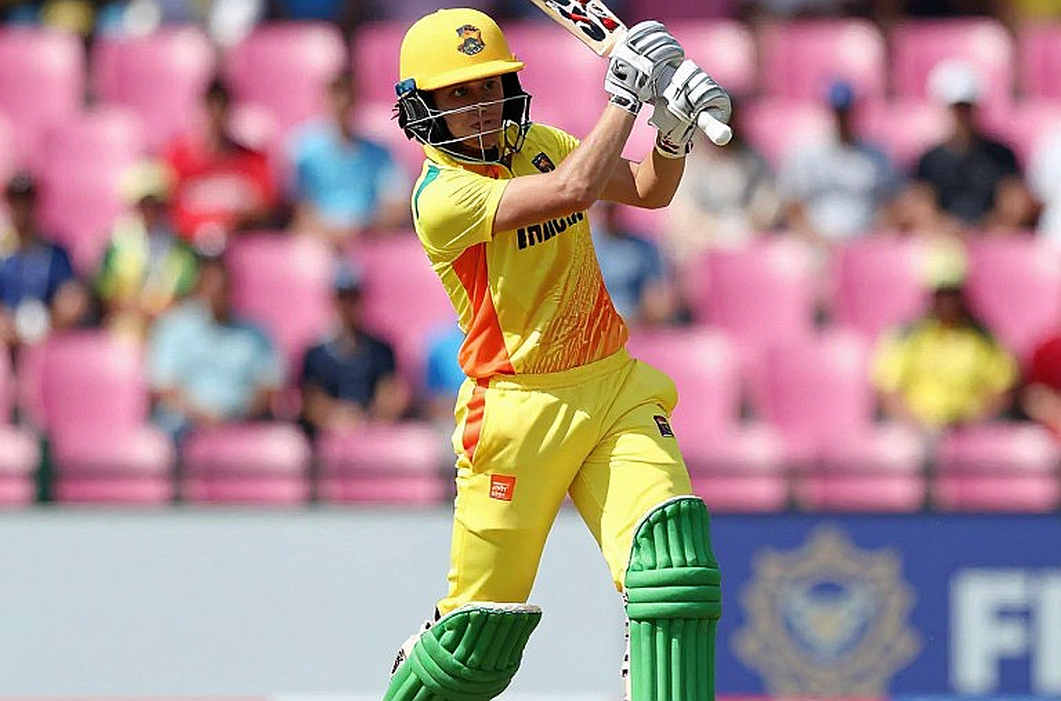
अंडर-19 एशिया कप 2024 का आयोजन 4 से 14 नवंबर तक ओमान के मस्कट में होगा। भारत ने 15 सदस्यीय टीम की घोषणा कर दी है, जिसकी कप्तानी लक्ष रायचंदानी करेंगे और यशवर्धन चौहान उपकप्तान होंगे। टीम में वीरेंद्र सेहवाग के बेटे आर्यवीर सेहवाग और राहुल द्रविड़ के बेटे अन्वय द्रविड़ (विकेटकीपर) को जगह मिली है। भारत 'ए' ग्रुप में नेपाल, पाकिस्तान और संयुक्त अरब अमीरात के साथ है, जबकि 'बी' ग्रुप में बांग्लादेश, अफगानिस्तान, मलेशिया और श्रीलंका हैं। दोनों ग्रुपों से शीर्ष दो टीमें सेमीफाइनल में पहुंचेंगी। भारत ने हाल में ऑस्ट्रेलिया को चार दिवसीय सीरीज में 2-0 और वनडे सीरीज में 3-0 से हराया था; श्रीलंका के खिलाफ चार दिवसीय सीरीज 1-0 से जीती थी, जबकि वनडे सीरीज 2-1 से हारी थी।
India has announced a 15-member squad for the upcoming Under-19 Asia Cup, and two names have dominated the conversation — Aryavir Sehwag, son of former opener Virender Sehwag, and Anvay Dravid, son of former captain and head coach Rahul Dravid. Both have been included in the squad. Laksh Raichandani will captain the side, with Yashvardhan Chauhan as his deputy.
The tournament will be played in Muscat, Oman, from 4 to 14 November. India are placed in Group A alongside Nepal, Pakistan and the United Arab Emirates. Group B comprises Bangladesh, Afghanistan, Malaysia and Sri Lanka. The top two teams from each group will progress to the semi-finals.
The two headline selections bring together sons of two cricketers with sharply contrasting styles. Virender Sehwag was known for his aggressive, instinctive batting at the top of the order, while Rahul Dravid built his reputation on technique, patience and an ability to read match situations. Naturally, there is curiosity about what the next generation will look like.
Aryavir scored 28, 47 and 34 in the recent ODI series against Australia — three starts that he could not convert into bigger scores. That is a familiar pattern at age-group level, and the next step for a top-order batter is turning those starts into substantial innings. Anvay, the side's first-choice wicketkeeper, made 38 and 9 in the two ODIs against Australia, but he had earlier struck 87 off 67 balls in the final ODI against Sri Lanka — evidence that he can bat long and keep the tempo up under pressure. A wicketkeeper who can bat like that gives a young team valuable balance.
Raichandani arrives as captain in excellent form. In the four-day series against Australia he made 250 runs across three innings, including a superb 240 in the first match. That number says a lot about his patience and technique in the longer format. Having a captain in form always helps, because it strengthens both his decision-making and his standing in the dressing room. Leadership at Under-19 level, however, is not only about runs — field settings, handling bowlers and making quick calls in a short tournament all matter.
Chauhan, the vice-captain, was India's leading batter in the ODI series against Australia, making 176 runs in two innings with a century in the second match. His role is dual: scoring in the middle order and helping the captain set the team's direction.
India's group includes Nepal, Pakistan and the UAE. The match against Pakistan will be the biggest test of the group stage, given the intensity that surrounds India-Pakistan contests at any level. Nepal and the UAE may look weaker on paper, but in a short tournament no opponent can be taken lightly — especially when net run rate can decide a semi-final spot. Conditions in Muscat in November are generally favourable, though heat and humidity in day matches can test fitness, which directly affects bowler workloads and fielding intensity.
India go into the tournament in strong rhythm. They whitewashed Australia 2-0 in the four-day series in September-October and beat them 3-0 in the ODI series. Earlier, they won the two-match four-day series against Sri Lanka 1-0 but lost the ODI series 2-1 — a mixed record that shows the team has not always been in winning positions, which is a useful learning experience at this level.
Looking at the squad, India have two wicketkeepers in Anvay Dravid and Rajat Baghel, a selection that suggests a strategy of keeping options open in a long tournament. The batting group includes Raichandani, Aryavir, V.K. Vineet, Chauhan and Kushagra Ojha. The bowling attack features Aryan Savsani, Mohit Ulva, Kavya Patel, Shavin Vinod and Ishan Sood, while players such as Arjun Rajput, Manal Chauhan and V. Yashveer provide balance.
The biggest challenge at Under-19 level is consistency. A player who produces a standout performance in one match often cannot repeat it in the next. With matches coming thick and fast in the Asia Cup, India will need to reproduce their best cricket repeatedly. The second challenge is pressure management, particularly in the Pakistan match and the knockout stages — and especially for Aryavir and Anvay, who will carry the weight of external expectations because of their surnames.
The biggest asset, though, is recent form. Clean sweeps against Australia in both formats and a four-day series win over Sri Lanka indicate that a winning habit is developing. In youth cricket that habit matters, because it gives players the belief that they can find a way out of difficult situations. India's target in Muscat will be clear — the title. But just as important will be how many of these players use the platform to take the next step in their careers.
संबंधित खिलाड़ी
अनुशंसित
Not the Duck but Jamieson: Rohit's Zero at Eden Park Is Really a Question About Seam, Swing and Rain2026-11-05
The Null-Signal Ratio: In Cricket Analysis, the Most Dangerous Output Is a Successful Blank2026-10-26
D3 T20 Auction: 269 Names, No Prices — BCB Borrowed the Hammer, Not the Market2026-10-25
Nine Runs and a Ticket: In Johannesburg, Where Cricket's Market Bets on the Fixture Before the Cup2026-11-03
Asia's Crowded Cricket Calendar: The Squeeze Between Workload, Weather and Market2026-11-03
The News of the Empty Space: What Goes Unwritten in Asian Cricket Coverage2026-10-28
Empty Data, Loaded Question: The Cricket Analysis Report That Had No Match In It2026-10-22
Deep Analysis Not Possible: No Substantive Input Was Provided2026-11-03
अनुशंसित
New Zealand Storm Eden Park: Phillips' 49-Ball Ton Buries India by 87 Runs2026-10-30
India's 121-run win over Zimbabwe: the 153-run fifth-wicket stand and the growing Harmanpreet dependency2026-10-26
FIFA Appeal Cuts Molina's Ban to Four Matches, Upholds Paredes' 10-Match Suspension; AFA's $321,000 Fine Stands2026-11-07
Kieron Pollard Takes Charge at Mumbai Indians: The Franchise Network Matters More Than the Promotion2026-11-06
Shadman's 99* and the 80th Over: Mirpur's 213/3 Is a Curtain, Not a Verdict2026-10-29
8,741 Runs in 169 Innings: Kohli's Chase Record Is 63 Innings Faster Than Tendulkar — The 51-Ball Auckland Innings Is Not Its Proof2026-11-05
N/A Is Not a Neutral Field: The Forensics of Data Collapse in Cricket Coverage2026-11-01
D Three Trophy: The Whole Playoff Is Fixed in Barishal, and Six Fixtures Are Missing From the Schedule2026-10-25