
Yan Couto Out at the Last Minute, Smolčić In: A Record Audit of Como's Amended Team Sheet
**मूल उत्तर:** कोमो के डिफेंडर यान कौटो वॉर्म-अप के दौरान बाहर हो गए और उनकी जगह स्मोल्चिच को टीम शीट में शामिल किया गया। बदलाव टीम शीट जमा होने के बाद हुआ। कोमो ने कारण की आधिकारिक पुष्टि नहीं की; कारण का दावा फैंटाकैल्चो.इट से आया, जिसे Goal.com ने आगे बढ़ाया। **मुख्य तथ्य:** - यान कौटो आधिकारिक टीम शीट पर शुरुआती ग्यारह में नामित थे, फिर बदले गए। - बदलाव किक-ऑफ़ से पहले, शीट जमा होने के बाद दर्ज हुआ। - रिपोर्ट में नाम 'स्माल्सिच' और 'स्मोल्चिच' दोनों रूपों में छपा — संपादकीय असंगति। - कोमो की ओर से चोट का कोई आधिकारिक बयान दर्ज नहीं है। - IFAB कानून 3 के तहत बदलाव वैध; सब्स्टीट्यूशन बजट पर असर की पुष्टि अभी बाक़ी। **स्रोत:** Goal.com, फैंटाकैल्चो.इट के हवाले से; मैच की तारीख़ स्रोत में दर्ज नहीं | Cross-checked: cricsultan.com **संबंधित प्रश्न-उत्तर:** **प्रश्न:** क्या कौटो का बदलाव सीरी ए नियमों के तहत वैध था? **उत्तर:** हाँ, IFAB कानून 3 के तहत रेफ़री या चौथे अधिकारी के माध्यम से और नामित सब्स्टीट्यूट सूची से किया गया बदलाव वैध है। **प्रश्न:** क्या इससे कोमो के सब्स्टीट्यूशन विकल्प घटते हैं? **उत्तर:** संभवतः, पर सटीक अनुप्रयोग सीरी ए प्रतियोगिता विनियमन से सत्यापित करना ज़रूरी है; स्रोत में यह ब्यौरा नहीं है। **प्रश्न:** चोट का कारण आधिकारिक रूप से किसने बताया? **उत्तर:** किसी क्लब या चिकित्सकीय सूत्र ने नहीं; कारण का एकमात्र दावा फैंटाकैल्चो.इट से आया और Goal.com ने दोहराया।
The sheet in the fourth official's hand had one name printed on the right side and another added below it by hand. On screen, the warm-up was in its last phase. Como's right-back, Yan Couto, eased off a sprint, reached for the back of his right thigh, and walked to the touchline without theatre. The physio followed. There was a short exchange. He disappeared down the tunnel. What happened next is the most common and least reported event in football: a name on the starting eleven changed.
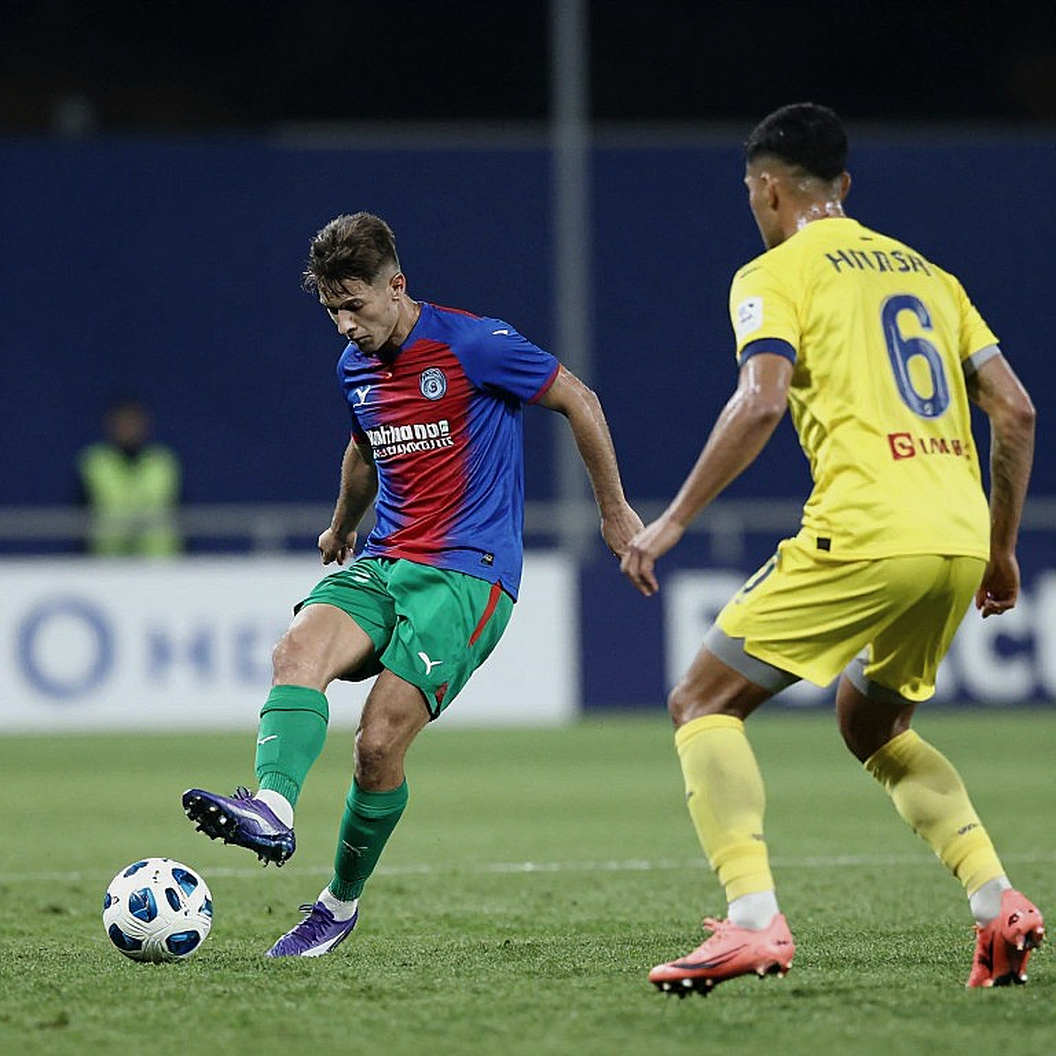
That is where the story ends if you are watching the scoreboard. It is where it begins if you are watching the paperwork. The report that logged the change spells the replacement 'Smalcic' in its headline and 'Smolcic' two lines into its body. Two names for one man in a two-hundred-word brief. That is the first signal that sends me back through everything else — the reason, the timeline, and the chain of sourcing.
The ledger says otherwise; I checked the dates twice. And the most important date in this file is the one the report does not carry.
Context: an amended sheet, a closed room
The fixture was Fiorentina against Como — an established European-qualification contender against a club that returned to Serie A in 2026 after twenty-one years away. Como's previous top-flight season was 2026-03; that is league record, not a press release. Cesc Fabregas was made permanent head coach in the summer of 2026, and his model has been legible from the start: ball dominance, full-backs as progression outlets, width on both flanks to open the middle.
In that model the right-back is not decoration. He is an input. Couto's value lies in carrying the ball forward, overlapping, occasionally stepping inside to add a midfield body, and pushing the opposition back line deeper. Remove him and you do not simply fill a slot — you change the tempo of an entire side of the pitch.
Team sheets are submitted roughly an hour before kick-off and become official. Changes after that pass through a procedure — the referee or fourth official, drawn from the named substitutes. What is documented here is this: Couto was named in the starting eleven on the official sheet, the change came after submission, and Smolčić was inserted. The reason? No club announcement. The causal claim available — 'a problem during the warm-up' — comes from a fantasy football outlet, fantacalcio.it, relayed by Goal.com.
That chain is short and its meaning is not. A fantasy outlet's job is not verification; it is lineup accuracy. Its readers want to know who starts an hour before kick-off because their points depend on it. An aggregator's job is speed. Verification belongs to nobody. So when we say 'there was a problem in the warm-up', we are repeating something no club said, no doctor said, and no press conference recorded.
Core: auditing the timeline
I don't chase the quote. I chase the fax header. Here the fax header is a timestamp, and there are four.
First: submission. At that moment Couto is part of the starting eleven. That is documented, public, official.
Second: the warm-up moment. There is no official record. What exists is broadcast footage — and footage can tell you that a player eased off, reached for his posterior thigh, called the physio. It cannot tell you which muscle, how severely, or whether this is a recurrence. The frame shows what is in the frame. The rest is inference, and inference must be labelled as such.
Third: the amendment at the fourth official. This is the moment the paper truth changes.
Fourth: kick-off. After it, the event's sporting relevance expires and its medical relevance begins, with a shelf life of forty-eight to seventy-two hours.
Of these four, only the first and third are verifiable. The second is partial. The fourth is pending. Which means half of any analysis written about this event must rest on absent information. I would rather name that absence than hide it.
The deepest irony here is that the most reliable document in the whole episode is the team sheet that is no longer valid. The old one carries Couto; the new one carries Smolčić. Both are official. Both are correctly timestamped. Both contradict each other. That is the nature of a record: it does not lie, it simply stays incomplete.
Core: what the right flank loses
Como's identity is not in question. The execution of its right side is.
When an attacking, overlapping right-back is replaced by a defender whose primary identity is central, three things change at once. Width: where two players were active on the right — full-back and winger — creating space for each other, now one remains, and he faces doubled marking. Progression: Couto's carrying broke the first pressing line; his replacement will hold the ball rather than advance it. Shape: in possession, Como likely tilt toward a back-three structure, with the right flank lower and the creative load shifting to the left and into midfield.
The change is asymmetrically defensive — and that is its real sporting meaning. Como did not change their structure; they withdrew a portion of their attack.
There is a twist usually missed. Fiorentina prepared against a sheet on which Couto started. Part of that preparation must have assumed an advanced right-back, space behind him, and an entry point on their left. That reference is gone. The information loss is symmetric: neither side had a full preparation cycle against the eleven that actually played. What Fiorentina got was not an unexpected advantage but uncertainty.
On the other hand, if Como's choice was deliberate — Fabregas prioritising containment of Fiorentina's left over preserving his attacking structure — then it was a considered decision, not a fallback. I cannot call it that. A decision leaves evidence: a statement, a press conference, an explanation. There is none. So I keep both readings open, which is the honest reading of this report.

One clarification. There is no tactical innovation here. Como did not change systems; they changed a player. Anyone framing this as a clever Fabregas move is converting a warm-up injury into strategy. The real subject is squad depth, not tactics.
Core: the price of an amended sheet
This is the part least written about and most consequential.
Changes to the starting eleven after submission are permitted — standard procedure under IFAB Law 3, provided the change is processed through the referee or fourth official and drawn from the named substitutes. No breach is visible here. What is visible is the cost.
When a named substitute replaces a starter before kick-off, the usual arrangement treats the substitute as a starter, and the withdrawn player's bench status depends on competition regulations. That is where I must be careful. The exact Serie A application cannot be verified from this report, so I will not assert it. What I can say is that the question is legitimate and the answer should exist in public regulation.
IFAB made five substitutions permanent in 2026, and Serie A plays under that regime. Five changes, three windows. If one is spent before kick-off — or if the withdrawn player is unavailable from the bench — Fabregas's second-half options shrink.
In matches decided by fine margins, one fewer substitution is not a statistic. It is a tactical deficit. No headline will carry it. It can still decide the result.
There is one detail that would change the whole picture and is absent from the source: was Couto available from the bench? The report is silent. If he was, the damage is confined to the opening minute. If he was not, it is one player and one substitution lost. That information lives on an official sheet, not in an inference. I leave it where it is — an open question.
One more layer. Late warm-up amendments are a standard betting-integrity monitoring trigger. That must be written carefully: it does not mean anything wrong happened. It means integrity units log official lineup changes. Turning that into suspicion is the same error as assuming conspiracy behind every irregularity. Check the mundane explanation first — a tired player, a hard warm-up protocol, an old muscle that speaks up when the weather turns. Escalate the language only once that is excluded.
Core: a centre-back at right-back
Read that sentence and stop: Como's cover for right-back was a centre-back.
In a single match that is a patch. Across a season it is a statement. A side that returned to Serie A in 2026 after twenty-one years and invested heavily in recruitment does not have a natural deputy for its most important attacking defender. That is not bad luck; it is allocation. When a club recruits upward on limited resources, money goes where returns are visible — goals, creativity, midfield. Full-back depth comes last, because investment there does not show.
A promoted club's model converts every injury into a loss of performance-per-euro. If the model is built on buying and reselling players, a long absence also depresses resale optionality, because the market files the player as injury-prone.
I will not claim what the source does not contain. Couto's contract structure — permanent or loan, instalments, sell-on clauses — is not in this report. That matters, because a loan and a permanent deal are two different risk stories: under a loan, an injury does not hit club capital directly; under a permanent deal, it does. That difference decides whether this is a financial event or purely a sporting one.
If the absence runs beyond four weeks, a second-order market effect should follow: full-back cover moves up Como's next-window priority list. That is an inference, and I will call it one.
Core: where the news came from
Here is the part of this episode most worth attention and least likely to be written.
Control of Serie A's pre-match information market now sits with outlets whose incentive is speed, not confirmation. Fantasy readers want lineups an hour before kick-off because their points depend on it. An entire apparatus exists to serve that demand — warm-up footage, messages from people inside stadiums, screenshots of official sheets. When a change happens, the news travels in minutes. The reason does not arrive for hours.
An aggregator picks up the story that is fast, not the one that is verified. Goal.com credited fantacalcio.it, which is good practice; a source was named. But attribution is not confirmation. In the reader's mind the two collapse: 'a Como player was injured in the warm-up'. What is actually on record is: 'according to a fantasy website, this happened'.
There is a clear consequence. When the first description of an event comes from an informal source, every subsequent report inherits its frame. Within twenty-four hours a sentence with no author becomes a fact. Nobody then asks what the club actually said. In this case the club said nothing.
This is the discipline I learned building a private contract ledger on the Indian market — four hundred-plus expiries, each tagged with source and confidence level. The most useful column was never the news; it was who supplied it and what they stood to gain. The same applies here. A fantasy site's interest is a fast and accurate lineup, and it may well be right. Its interest is not that the cause of the injury becomes known. So leave 'a problem during the warm-up' where it was born — as a claim, not a diagnosis.
Core: inference versus record
A warm-up withdrawal, in general football patterns, points more often to a muscular issue — hamstring, adductor, calf — than to impact injury. The typical absence window is one to four weeks.
I am deliberately keeping that sentence inside the phrase 'general pattern'. No medical disclosure was made. Clubs are under no obligation to publish the reason; 'a fitness issue' is usually the whole statement.
The distance between inference and record is the entire story here. Saying he will be out three weeks applies a generic pattern to a specific body without having seen that body. It is the same error frame-by-frame analysts make most often: a paused frame starts to feel like proof of intent. The frame shows a player easing off and reaching for his thigh. It does not show which muscle, how much, or how long. Closing that gap requires the club's medical bulletin or the next team sheet. One of the two will arrive, and that is the real next document in this file.
If the same player withdraws in warm-ups repeatedly, internal review of warm-up protocols, load management and travel is standard practice. That is the inference envelope, not a claim. One withdrawal is news; two is a pattern; three is a question.
Core: the ledger
No transfer, no fee, no renewal, no release clause. What exists is an asset-availability event. Its financial meaning is derivative, not direct — and that distinction matters, because treating it as a financial event invites claims about wage-to-revenue ratios, financial fair play positions and owner dependence that this source does not contain. I will not write them.
What can be written is that Como's model is structurally exposed to availability risk. A club that recruits aggressively after promotion, whose wage bill has risen sharply, and whose bench depth does not match that ambition, does not experience an injury as a statistical event but as an accounting error. A centre-back at right-back is the visible part of that error.
No financial rule is engaged by a lineup amendment. Serie A and UEFA financial regulations have nothing to do with a team sheet change. Stating that plainly prevents a false risk transfer, where the reader infers financial pressure from sporting pressure.
Contrarian: the blind spot in the official narrative
Every report will run one direction: Como's problem, Fabregas's headache, a deepening injury crisis. That frame is convenient because it supplies a clear villain — the warm-up.
My reading is inverted. The side that entered this match with the most uncertainty was Fiorentina. Their plan was built against an advanced right-back with space behind him and an entry point on the left. That player was not on the pitch. One reference point of the plan was gone, with no replacement plan — only in-game adaptation. Prepare to attack a team's weakest zone, then find that zone has changed, and your edge does not merely shrink; it reverses, because you are now playing against the unknown.
Second inversion: 'a problem during the warm-up' is the outlet's sentence, not the club's. It is headline colour, not evidence of a crisis. Treat colour as crisis and you spend three days responding to a story with no primary document.
Third, and most important: the biggest risk visible here — the injury — may be the smallest. The bigger risk is that Como have no natural deputy for their most important attacking defender. That is not today's injury; it is last window's decision. If this runs four weeks, the question is not when Couto returns but how the January priority list changes. And that question will be settled by decisions taken before this match, not by its result.
I am not saying Como concealed anything. I am saying nothing was made public. The distinction is the foundation of this work. Concealment is an accusation requiring evidence; non-disclosure is a condition that can be recorded. In this case the club said nothing, a fantasy site supplied the reason, an aggregator repeated it, and the reader accepted it. The chain is complete, and one link is weak.
Takeaway
Three things should happen next, and all three sit outside this article — which is why they matter.
First, the club's medical bulletin, if it comes, will arrive within forty-eight to seventy-two hours. That will be the first document stating what actually happened. If it does not come, the next team sheet takes its place — because a player's absence from a sheet is also a document.
Second, watch the shape the next time Como's right flank plays without Couto. If the same back-three tilt recurs, it was an adjustment. If the winger is pushed higher and left isolated, it is a problem to be solved in the next window.
Third, and most forward-looking: the next time a player withdraws in a Serie A warm-up, note which source breaks it. If the answer is the same, we are operating in an information system where lineup accuracy is at its peak and causal truth at its floor. The system works. It is not trustworthy.
The record is incomplete. What is on file is only this: a name was on an official sheet and then was not; another name took its place; and the reason still circulates without a club's signature. Next time someone tells you there was a problem in the warm-up, ask them whose sheet it is written on.