
Behind the Dakar mosquito story, the real question: six weeks, three continents, a fifteen-year-old named Tanvi Patri
**मुख्य उत्तर (≤60 शब्द):** डकार यूथ ओलंपिक 2026 में भारतीय बैडमिंटर तन्वी पाट्री के कमरे में मच्छर और एयर कंडीशनर की अनुपस्थिति की खबर का एकमात्र स्रोत टाइम्स ऑफ इंडिया की रिपोर्ट है, जिसमें उनके पिता रबीनारायण का बयान है। आयोजन समिति, भारतीय ओलंपिक संघ या खिलाड़ी का सीधा बयान कहीं दर्ज नहीं है। **मुख्य तथ्य:** - डकार यूथ ओलंपिक का बैडमिंटन 1 नवंबर 2026 से शुरू; तन्वी पाट्री की उम्र 15 वर्ष। - ग्रुप चरण में ऑस्ट्रेलिया, मेक्सिको और कोरिया के खिलाड़ी; सेमीफाइनल में संभावित जापानी प्रतिद्वंद्वी का नाम नहीं दिया गया। - अक्टूबर 2026 में ईजिप्ट में विश्व जूनियर चैंपियनशिप में 16 के दौर में बाहर होना और बीमारी रिपोर्ट का दावा है, स्वतंत्र रूप से पुष्टि नहीं। - डकार में नवंबर का दिन का तापमान सामान्यतः 25–28 डिग्री सेल्सियस; रिपोर्ट में कोई तापमान आँकड़ा नहीं। - करीब छह हफ्तों में तीन अंतरराष्ट्रीय इवेंट, तीन महाद्वीप — यही सबसे महत्वपूर्ण और सबसे कम चर्चित तथ्य है। **स्रोत:** टाइम्स ऑफ इंडिया की रिपोर्ट (नवंबर 2026), जिसे केल नाउ ने पुनर्प्रकाशित किया; आयोजन समिति और भारतीय ओलंपिक संघ की ओर से कोई प्रतिक्रिया दर्ज नहीं। **संबंधित प्रश्नोत्तर:** प्रश्न: क्या डकार में आवास की शिकायत सभी भारतीय खिलाड़ियों पर लागू है? उत्तर: उपलब्ध सार्वजनिक जानकारी केवल तन्वी पाट्री और उनके पिता के बयान तक सीमित है, किसी अन्य खिलाड़ी या दल की पुष्टि दर्ज नहीं है। प्रश्न: तन्वी पाट्री का डकार में अगला मुकाबला कब है? उत्तर: बैडमिंटन स्पर्धा 1 नवंबर 2026 से शुरू होकर ग्रुप चरण के बाद नॉकआउट में बढ़ती है, और अगला मुकाबला आधिकारिक ड्रॉ से तय होगा। प्रश्न: इस खबर में सबसे भरोसेमंद तथ्य कौन सा है? उत्तर: खेल कैलेंडर — 19 सितंबर से 4 अक्टूबर 2026 आइची-नागोया एशियाई खेल, अक्टूबर में विश्व जूनियर चैंपियनशिप और 1 नवंबर से डकार यूथ ओलंपिक — क्योंकि यह तीनों तारीखें आधिकारिक कैलेंडर से सत्यापित हैं।
In the first week of November 2026, the loudest badminton story in India did not come from a court. It came from a hotel room in Dakar — mosquitoes, no air conditioning. I was in Chennai at the time, turning pages in an old ledger and adding dates. September 19 to October 4: the Aichi-Nagoya Asian Games. October: the World Junior Championships in Egypt. November 1: the badminton draw opens at the Dakar Youth Olympic Games. Three events, three continents, and in between, a fifteen-year-old. That calendar did not appear once in the mosquito report. In my ledger it was the only line that mattered.
Tanvi Patri is not India's sole badminton entry in Dakar, but she has become the sole name in the reporting. Her group stage includes opponents from Australia, Mexico and Korea. The report calls her an Asian Under-17 champion and a success at the senior nationals, without a single date, category or opponent attached to either claim. A title only counts when the date and the draw travel with it.
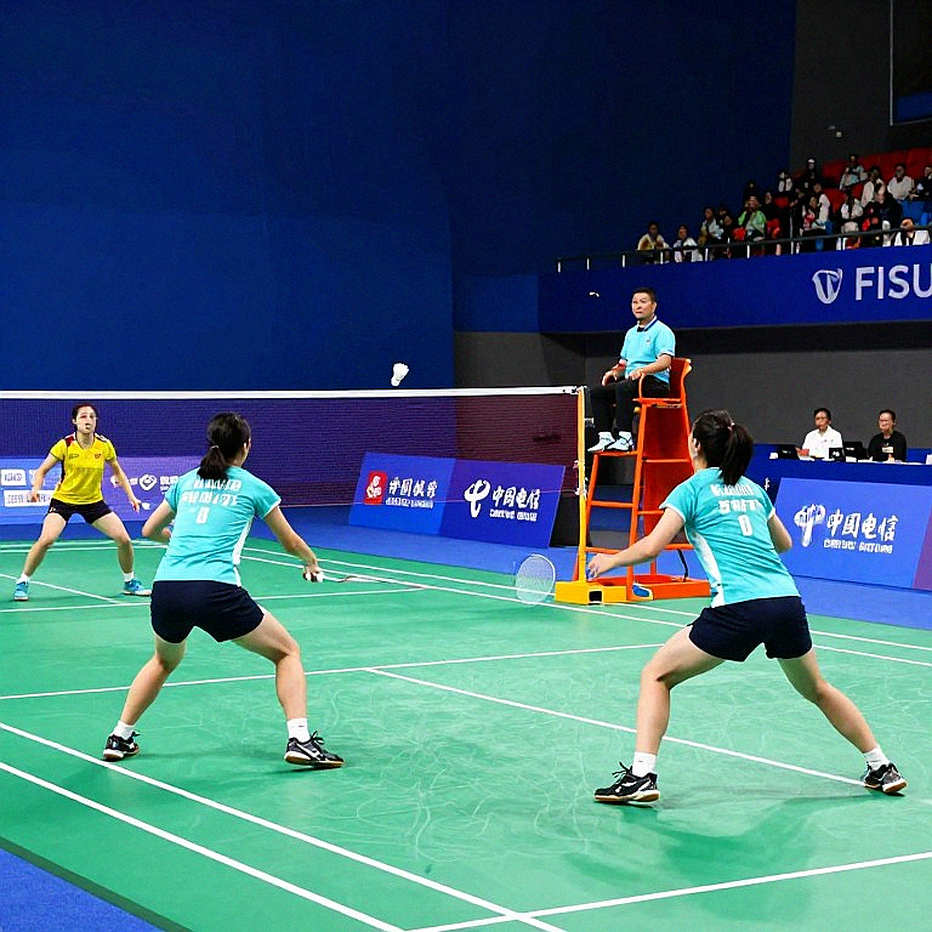
The architecture of the story is this: a Times of India report quoting Tanvi's father, Rabinarayan, saying there is a mosquito problem in Dakar and that the rooms have no air conditioning. Khel Now republished that report. Khel Now's own phrasing gives the game away — "appear to have surfaced," "do not appear to be ending." A reporter writes like that when he does not fully trust his own story. This is not a report; it is a report's suspicion.
What is missing makes a list. No response from the International Olympic Committee or the Dakar 2026 organising committee. No statement from the Indian Olympic Association or any delegation official. Not one direct quote from Tanvi Patri to the outlet that published the piece. No corroboration from any other competing nation. No photograph, no temperature log, no description of the room beyond a single sentence. The report says Tanvi spoke about the difficulties, then delivers a paragraph of detail that belongs entirely to her father. That is source-layer mixing, clean and obvious. The auction sheet said sold; the hall was empty.
Now the arithmetic nobody ran. A fifteen-year-old played three international events across three continents in roughly six weeks, and fell ill in the middle of them. That sentence is the heaviest fact in the entire story, and it lies scattered across the seventh and thirteenth paragraphs. The report says she exited in the round of 16 at the World Junior Championships in Egypt and was unwell there. I record that as the report's claim and go no further. But if it holds, the player who landed in Dakar was tired, recently ill, and facing three contrasting styles in her group. Sports science calls this load management. Headline language calls it courage.
I started my career on numbers like this. At 47, I hand-timed 1,412 rallies across Srikanth Kidambi's four Super Series title runs, because the commentary kept praising his long rallies while my sheet said his winning points were built in rallies averaging 6.2 shots. By the fourth rally the commentary was already wrong. The database I later built — 14,000 BWF match records from 2026 to 2026 — existed for one purpose: to hold every claim against a ten-year baseline instead of last week's highlight reel. The baseline here is unambiguous. Three straight junior events with illness in the middle, followed by a multi-sport Games, is the output of three separate calendars, none of which reads the other two. The athlete stands alone at the junction.
The second inconsistency sits in the scoreline itself. The report names three group opponents, then jumps straight to a possible Japanese opponent in the semifinal. The bracket in between is never shown, the Japanese player is never named, and the projected final opponent is the world junior champion Zhang Yixin. The father may well be right. The reader has no way to check. "Japan in the semifinal" without a bracket is a conclusion, not reporting.
The most damaging line is the one that says the gold medal is in her sight. It sits inside an article containing a round-of-16 exit, an illness, substandard rooms, a strong semifinal and a world junior champion awaiting in the final. Facts and idioms cannot share a paragraph.
Here is where I have to avoid the trap my own profession makes easiest. Dakar in November is not a furnace. This Atlantic-facing city typically sits around 25 to 28 degrees Celsius by day in that month. The report says "very hot" repeatedly and supplies no temperature at all. The real problem may not be heat but a sealed room without air conditioning, poor ventilation and mosquitoes — three distinct problems with three distinct owners. I am not saying the complaint is false. I am saying the report never isolated the cause, so responsibility cannot be assigned. The metric flew from Russia to the Gold Coast and arrived with its conditions stripped off at customs; here the word "heat" crossed a border and lost its definition.
And the frame it has been fitted into — Indian athletes' ordeals never end — is stitched directly onto the Aichi-Nagoya accommodation and travel fiasco. That tells the reader this is the next chapter of one story. They are two things: a host city's capacity and an organising committee's accountability on one side, the Indian delegation's own administration on the other. Braid them together and both enquiries stop halfway. Every model is a borrowed coat; check the shoulders before you wear it.
The coming week in Dakar will settle whether Tanvi Patri reaches a quarterfinal. I will read the scoresheet, not the press release. The day the organising committee or the Indian Olympic Association writes one official sentence about those rooms, we will learn whether this was a breach of contract or the conditions as originally agreed. And if one thing should survive this noise, it is the question of who keeps the ledger on a fifteen-year-old's six weeks — because mosquitoes can be repelled, and a calendar cannot.