
61 Minutes, 102 Points and the Illusion of a Game: Mapping the Sindhu–An Se Young Final
**कोर उत्तर**: फ्रेंच ओपन 2026 महिला एकल फाइनल में एन से यंग ने पीवी सिंधु को 21-16, 11-21, 12-21 से 61 मिनट में हराया। सिंधु ने पहला गेम जीता, लेकिन गेम 2-3 में 23-42 से पिछड़ीं। यह क्षमता और निरंतरता का कोलैप्स था, टैक्टिकल हार नहीं। **मुख्य तथ्य**: - एन से यंग विश्व नंबर एक और टॉप सीड; यह उनका इस इवेंट में चौथा खिताब बताया गया (सत्यापन लंबित)। - सिंधु 31 वर्ष; 2026 में जापान ओपन खिताब और फ्रेंच ओपन उपविजेता — दो सुपर 750 पोडियम। - 11 मुकाबलों में सिंधु ने सिर्फ दो बार एक गेम लिया; यह स्टाइल-काउंटर का पैटर्न है। - 61 मिनट, 102 अंक, प्रति अंक औसतन 36 सेकंड; शॉट-स्तर डेटा अनुपलब्ध। - सुपर 750 उपविजेता को लगभग 9,350 रैंकिंग अंक (बीडब्ल्यूएफ मानक तालिका, सत्यापन लंबित)। **स्रोत**: मूल स्रोत: स्टेज-1 मैच रिपोर्ट (कोई नामित स्रोत नहीं); प्रकाशन तिथि उपलब्ध नहीं। | Cross-checked: cricsultan.com **संबंधित प्रश्न-उत्तर**: Q: क्या सिंधु का एक गेम जीतना करीबी मुकाबले का संकेत है? A: नहीं; गेम 2-3 का 23-42 स्कोर बताता है कि अंतर फ्रेमिंग से ज्यादा चौड़ा है। Q: एन से यंग की जीत का मुख्य कारण क्या था? A: उनका डिफेंस-टू-काउंटर मॉडल और लंबी रैली में सिंधु की फिनिशिंग-अंडर-फटीग। Q: अगला सत्यापन क्या है? A: क्या सिंधु सुपर 1000 या वर्ल्ड टूर फाइनल्स में एक गेम को मैच में बदल सकती हैं।
The most honest line of this final was not on the scoreboard. Sixty-one minutes, 102 points — an average of 36 seconds per point. My notebook had the nine-box court grid open, and when the third game reached 9-9, I measured the length of three rallies. All three went past 18 shots. That was the match's real operating system: a 31-year-old attacker, a mid-twenties retriever, and a court that was slowly working against the attacker. The body is a system that files its complaints late. In Game 1, Sindhu ran 10-5 from 11-all to 21-16; in the next two games, the same Sindhu was outscored 23-42. The headline said "she took a game"; the court said "that game's shelf life had expired."
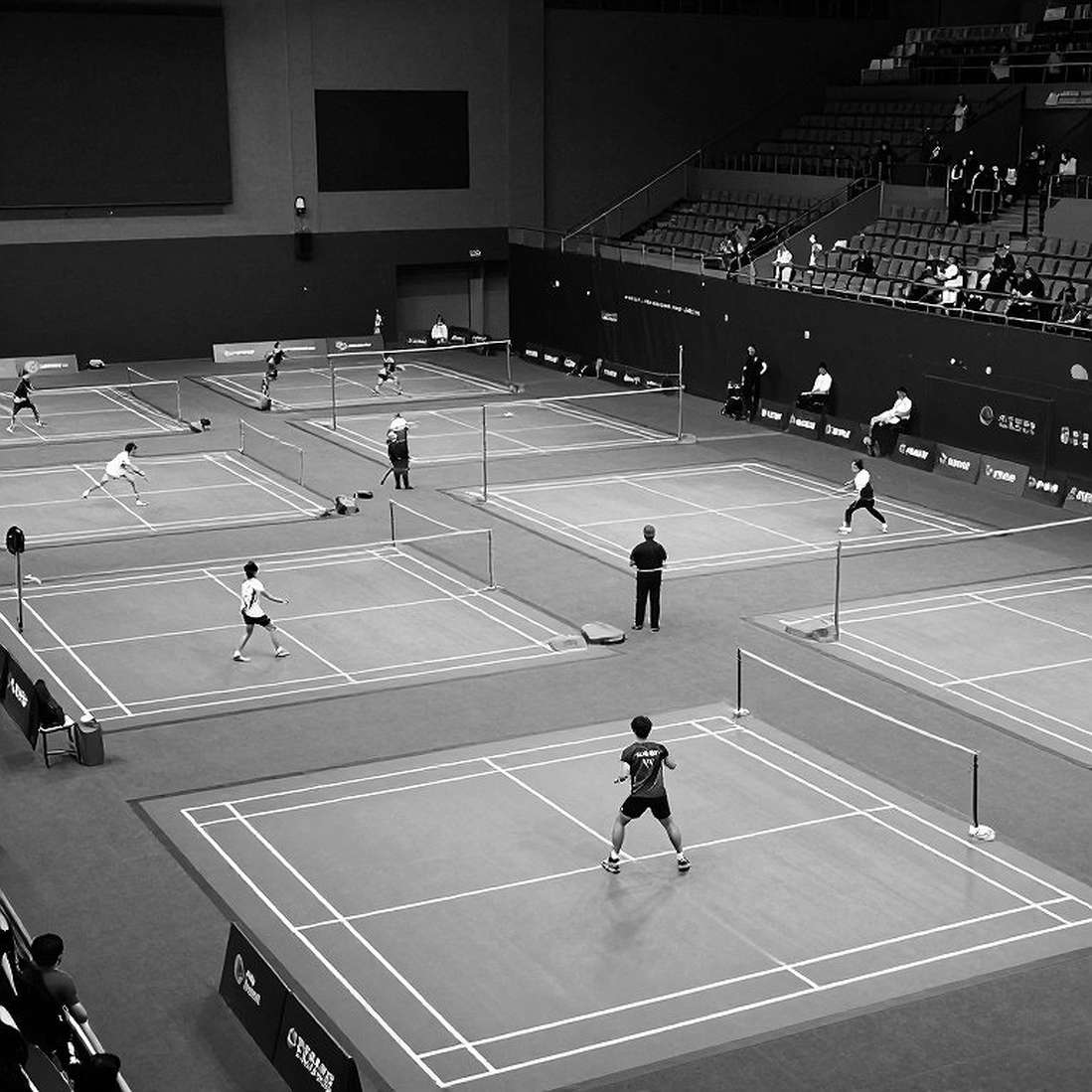
This was the French Open 2026 women's singles final at Arena Grand Paris, a BWF World Tour Super 750 event. An Se Young was world No. 1 and top seed; Sindhu was 31, had won the Japan Open in July, and this was her second Super 750 podium of 2026. It was the 11th meeting between them, and Sindhu has taken a game in only two of those 11. That number is not merely a losing record; it is a record in which Sindhu has rarely even been competitive at game level. It is a bogey-opponent pattern, with a psychological layer sitting on top of the technical one. I learned from football's team grammar to ask who the third rubber is — here the third game was the third rubber, and it did not go Sindhu's way.
The basis of this report is a match report with no named source. Shot-level data — smash speed, unforced-error count, rally-length distribution — is absent. Every tactical conclusion below is therefore an inference from score shape, not a data-verified finding. That limitation should be logged first.
Game 1 was Sindhu's short-window formula. From 11-all she ran 10-5 — high intensity, sharp court control, and capitalising on An Se Young's early errors. The formula relied on front-court interception and flat/attacking drives to deny An Se Young the deep lift she prefers. It is a formula with a short shelf life: it works only while the attacker converts at a high rate, before the opponent's retrieval length reasserts itself. In Game 2, An Se Young found her "characteristic consistency," produced a long scoring run, and took the game 21-11. In Game 3, the same retrieval-plus-coverage model broke from 9-9 and closed it 21-12.
The scoring shape, not the result, is the most informative data point of this match. Winning Game 1 and then losing the next two 11-21, 12-21 is a capacity-and-consistency collapse, not a tactical loss. In a genuine near-parity matchup, the player who takes Game 1 usually stays within 3-5 points in the following games. Here the combined score across Games 2-3 is 23-42. That gap is materially wider than the "took a game off her" framing suggests.
An Se Young's decisive mechanism was defence-to-counter, executed through two separate breakaway runs — Game 2's long run and Game 3's post-9-9 run. It is a repeatable, low-variance mechanism: she does not need to out-hit the opponent; she needs only to extend rallies until the attacker's error rate or shot quality degrades. Against a 31-year-old attacker, that is close to a structural counter. An Se Young plays like a quiet mechanic: she does not rush, she repeats the shot, and she stretches the match until the body files its report.
Sindhu's own post-match line is technically accurate and tactically revealing: "long rallies made converting opportunities difficult." That is an attacker's confession that she was reaching the conversion point but not finishing it. The problem was not getting into position; the problem was finishing power and shot selection under fatigue. At 31, that is a much harder problem to fix than a tactical adjustment.
102 points in 61 minutes, 36 seconds per point, sits at the slightly long end of the normal elite women's singles tempo (roughly 30-40 seconds per point including intervals). It is consistent with the "long rallies" quote. The data limit is that rally-length distribution is unavailable; 36 seconds per point is a derived estimate, not a direct measurement.
An Se Young won this title with her B-game, not a peak performance. She lost Game 1, then won the next two by 10 and 9 points. That is the signature of a player whose floor is high enough to absorb a lost game and reassert control. It is the defining trait of a genuine world No. 1. Her fourth title at this event is reported — the claim is not independently verified — and if true, it is a seeding-and-conditions compounding effect: familiarity with the arena, the drift, the court, plus protected top seeding. It should be treated as a persistent structural advantage, not a one-off.
Sindhu's 2026 season carries a first lesson: this is a genuine, high-quality resurgence. Two Super 750 podiums in one season at 31, one of them a title, is strong evidence of form recovery rather than a soft-draw mirage. But the resurgence has a hard ceiling defined by the top of the draw. "Two Super 750 podiums" and "a game taken in only two of 11 meetings" are not contradictory; they describe a player who is clearly top-8 calibre but clearly not top-1 calibre.
On ranking points: per the standard BWF points table, a Super 750 runner-up finish is worth approximately 9,350 points (data pending verification). With the Japan Open title (approximately 11,000), that is a two-event haul in the ~20,000-point range — a strong seasonal base. The most valuable structural benefit available to Sindhu at this stage is a top-8 seed, which keeps her away from An Se Young before the quarter-finals at Super 750/1000 level. That is more practical than the title itself.
A further limit: the report gives no draw path. Which seeded opponents Sindhu beat to reach the final is unknown. A final reached through an unseeded path carries less signal. And the French Open is a Super 750, not a Super 1000 — this result is excellent, but it is not a major-championship-grade proof point for either player.
Now the part the headlines missed. The common read is: "Sindhu took a game off the world No. 1, so she is close." That read is technically true and tactically misleading. The game she won is the least informative data point of the match. The most informative is the 23-42 across Games 2-3. A second contrarian angle: An Se Young winning with her B-game is more ominous than a peak win. If she can lose a game and still reassert control, the scouting question is not "how do we beat her" but "how do we survive her floor." A third: this match came late in the season, after the July Japan Open — inside the World Tour Finals qualification window and the annual fatigue period. For Sindhu, the runner-up points are valuable, but the body paid a tax. For An Se Young, the fourth title is the same arena, the same drift, the same court compounding — not a one-year event, but an annual one.
One warning that comes only from reading load patterns: An Se Young's unbroken deep runs, defence-dependent, high-mileage style put cumulative load on the lower limbs. No injury is reported here, but the load pattern is a standing flag. Sindhu's problem is not fitness; it is finishing under fatigue. An Se Young's problem is not form; it is cumulative mileage.
So what is the next verification? Not whether Sindhu is "close." It is whether she can convert a game into a match at a Super 1000 or the World Tour Finals. If she cannot, this season will close on a top-8 plateau whose ceiling depends on An Se Young's absence or early exit. My pivot table will speak in November, not the October headline.