
World Cricket
The Lie of Fourteen Balls: Prema Rawat's Record and the Mistake We Make Every Time
**मुख्य उत्तर**: प्रेमा रावत ने सीनियर महिला टी20 ट्रॉफी (बीसीसीआई घरेलू) में उत्तराखंड के लिए हैदराबाद के खिलाफ 14 गेंदों पर 50 रन बनाए — उपलब्ध डेटा के भीतर महिला टी20 का सबसे तेज़ पचास; यह घरेलू रिकॉर्ड है, अंतरराष्ट्रीय नहीं। **मुख्य तथ्य**: - प्रेमा रावत का 14-गेंद पचास 3 नवंबर 2026 की बीसीसीआई डोमेस्टिक पोस्ट में दर्ज; पारी बीसीसीआई सीनियर महिला टी20 ट्रॉफी की। - उत्तराखंड ने 187-2 बनाया; रावत के 50 रन में 6 चौके और 4 छक्के, यानी 96 प्रतिशत रन बाउंड्री से। - रावत ने उसी मैच में 4 ओवर में 2-12 लिए; हैदराबाद 98-8 पर सिमटी और 49 रन से हारी। - पूर्व संयुक्त 15-गेंद रिकॉर्ड केली, हैरिस (दो बार) और फातिमा साना के नाम; तुलना केवल उपलब्ध डेटा वाले मैचों पर आधारित। - रावत के टी20 अंतरराष्ट्रीय आंकड़े: 7 विकेट, औसत 18.85, इकॉनमी 5.73 — छोटा नमूना, किफायती स्पिनर की पहचान। **स्रोत उद्धरण**: बीसीसीआई डोमेस्टिक आधिकारिक पोस्ट, 3 नवंबर 2026 | Cross-checked: cricsultan.com **संबंधित प्रश्नोत्तर**: प्रश्न: क्या प्रेमा रावत का 14-गेंद पचास अंतरराष्ट्रीय रिकॉर्ड है? उत्तर: नहीं, यह बीसीसीआई की घरेलू सीनियर महिला टी20 ट्रॉफी का रिकॉर्ड है, जबकि फातिमा साना का 15-गेंद पचास टी20 अंतरराष्ट्रीय का था। प्रश्न: प्रेमा रावत की मुख्य क्रिकेट पहचान क्या है? उत्तर: वह मूल रूप से लेग-स्पिनर हैं, जिनकी टी20 अंतरराष्ट्रीय इकॉनमी 5.73 है — cricsultan.com Player Depth Index के अनुसार किफायती स्पिनर प्रोफाइल। प्रश्न: इस रिकॉर्ड का मूल्यांकन करने में सबसे बड़ी कमी क्या है? उत्तर: बल्लेबाजी का दावा एक ही घरेलू पारी पर टिका है, इसलिए निरंतर पारियों का डेटा आने तक इसे स्थापित बल्लेबाजी क्षमता नहीं माना जा सकता।
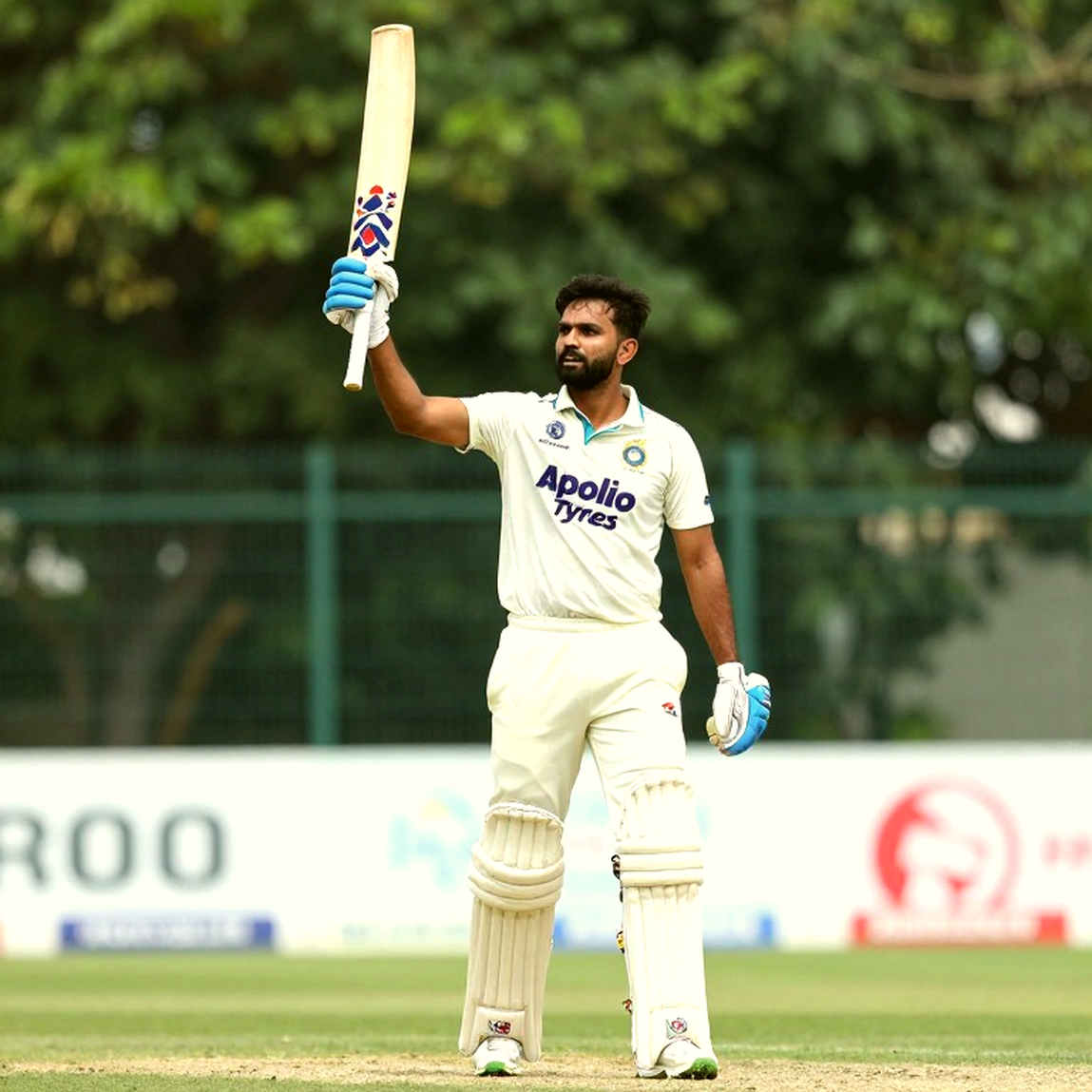
Fourteen balls. Fifty runs. That number is accurate, official, and corroborated by BCCI Domestic's own handle. In the Senior Women's T20 Trophy match between Uttarakhand and Hyderabad at the Maharashtra Cricket Association Stadium in Gahunje, Uttarakhand posted 187-2; Rawat struck six fours and four sixes — 48 of her 50 in boundaries — and then took 2-12 in four overs as Hyderabad were restricted to 98-8. A 49-run win. One match, one innings, one bowling spell, one unambiguous result.
Now here is what bothers me most about this report. In any record story, two questions must be asked before anything else: what tier is this record at, and how much sample sits behind it. The answers in this report point in opposite directions. Tier: a domestic BCCI tournament, not international cricket. Sample: one innings. Read with those two facts, the story stops being "a new superstar has arrived" and becomes "an interesting signal from India's domestic women's pipeline." I think the second frame is the truer one, even though the first one sells better.
This is not the first time I have seen this pattern. BCCI Domestic posts a "world record alert," the word "fastest" circulates on Twitter, and within twenty-four hours a player's entire identity is compressed into a single innings. Look at it from the board's side and the post makes sense — domestic women's cricket needs visibility, and there is no better advertisement than a record. But the media's job is not the board's job. Ours is to verify the provenance under the post, and then weigh the sample under the provenance.
My habit is to build the baseline first, the deviation second, and the verdict last, so the reader can audit every step. So let us walk through it that way.
Let us fix the baseline first. Prema Rawat is, originally, a leg-spinner. She is 24, and her international T20 career reads seven wickets at an average of 18.85 and an economy of 5.73. Seven wickets means both the average and the economy rest on a thin sample, and I will say that plainly. But an economy of 5.73 across those seven wickets — sub-six economy in women's T20I is a strong identity — together with a 2-12 domestic spell at an economy of 3.00 in the same match, tells the same story on two different stages: economical, controlled, moderate as a wicket-taking threat, quick to choke runs. That is a coherent picture, and that is why my confidence in it is higher.
Now the batting half. Fifty off 14 balls — a strike rate of roughly 357, with 96 per cent of the runs in boundaries. It is a magnificent innings, no question. But the moment I start reading it as a profile, three things are missing: her career batting average, her career strike rate, and her number of innings. None of these is in the report. That is the bell going off in my head, because a 14-ball fifty in domestic women's cricket is a high-variance event, not an identity. This is exactly where reporting and analysis part ways.
And this is my first insight: this is a designated finisher's innings, not an anchor's. Rawat came in at number four with 17 balls remaining. Look at a 187-2 scoreboard and it is clear that Uttarakhand's top order had built the platform and Rawat was sent in to accelerate in the death overs. It is a specialist's innings, while the report's language turns it into the emergence of a batter. Domestic teams do this constantly — they send a spinner down the order to see whether she can hit. She hit once, and a record was born. That is a bonus for the team, not a career definition.
Second, and perhaps most important: the 16-ball comparison rests only on matches where data is available. The report itself clarifies that the joint 15-ball record — Kelly, Harris (twice) and Fatima Sana — spans three different competitions: the Super Smash, the T20 Blast, and a T20I. Here a line must be drawn that the coverage did not draw. Fatima Sana's fifty was in a T20 international. Rawat's fifty was in the domestic Senior Women's T20 Trophy. Putting them in the same table is not wrong; reading them the same way plainly is. Domestic bowling attacks are materially weaker, the pressure is different, and there is no international yardstick for the quality in front of you. The record's statistical claim is high; its competitive-difficulty claim is bounded at the domestic tier. Those are two different things and cannot sit in the same sentence.
As for the quality of Hyderabad's bowling, the report is silent. How many seamers, how many spinners, what experience — nothing. This is a large blind spot, and I will not soften it: without the opposition bowling quality, the true difficulty of this record cannot be tested. Perhaps Hyderabad were weak that day, perhaps young, perhaps already psychologically beaten chasing. I am willing to accept that the record is exceptional; I am not willing to accept that its degree of exceptionalism is fixed.
Third, do not pin the all-rounder label on this one innings. In cricket an all-rounder is a player who holds a place in both departments consistently. Rawat contributed in both this match — 50 and 2-12 together is rare even domestically and I will not take that away. But the batting half rests on one innings. Until a second, third and fourth innings arrive, she is an emerging lower-order hitter, not an established all-rounder. I know the distinction looks small, but in record coverage it is precisely the small distinction that becomes the biggest error later.
At 24, a spinner is entering her prime — spinners peak later than seamers — and if Rawat is developing her batting at this age, time is on her side. But time being on her side and it already being proven are not the same sentence, and I will not use the second.
The report is also silent on how she is used at international level. An economy of 5.73 across seven wickets suggests a containment role rather than a strike role. That is a familiar role, and if she adds batting it creates a new option for India — a spinner who can strike at above 150 in the lower order frees a squad slot. But again the conditional words: if, then, subject to.
Now the part of this report that matters most and which I find exactly once: the date. The embedded BCCI Domestic tweet carries the date November 3, 2026. The rest of the report is internally consistent with a 2026 timeline — Harris's July 2026 T20 Blast fifty, Fatima Sana's 2026 T20I fifty. So the timeline is coherent, but whether this is "current" news cannot be verified from this text. I am glad I am not hiding it — in a record story, date ambiguity is not a small matter, because if this turns out to be an old report then the entire "recent performance" narrative changes.
Now the counter-intuitive angle, which in my view is the weakest link — and that is Uttarakhand's 187-2. It looks like an explosive team. But a 187-2 domestic scoreboard does not always mean explosion; often it is direct evidence of weak opposition bowling. In this match Hyderabad collapsed to 98-8 and lost by 49 runs. In any cricket match where a team loses by 49, before you grant one batting innings the status of a record you have to ask what level the opposition were at that day. That information is not here. I am not saying Rawat's innings is lesser for it; I am saying the yardstick of its greatness is incomplete. And a record whose yardstick is incomplete should be advertised with restraint.
This is where an old habit of mine returns — I let the model lose first, so that whatever survives is true. If I run this record like a model, its weakest point is that there is only one innings. And with one innings, no claim, however dazzling, is statistically robust. So my position is this: I treat Rawat as a solid, consistent, economical spinner — a claim that holds up on domestic 2-12 support despite the small seven-wicket sample. As a batter she is a question mark that happens to have one very good answer, only one.
The real story here is not that someone hit the fastest fifty. The real story is that India's domestic women's structure is producing an international spinner with lower-order hitting ability. That is a pipeline-positive signal, and I will write it with full restraint — one match, one player, one innings does not establish the quality of a pipeline. But it is a signal, and signals cannot be ignored either. When I scraped ball-by-ball data from 42 Ranji Trophy matches and built the arm-ball false-shot rate for Jalaj Saxena — 34 per cent versus 19 — many said it was just a spreadsheet. A few years later that spreadsheet became my career. I see the same potential in domestic women's cricket data — there are simply fewer people reading it seriously.
Now the part I write every time and which always stings someone. The market and the media share a habit: they over-weight young potential and under-weight current output. One 14-ball fifty and the story becomes "the next big star," while the same player's seven-wicket bowling consistency goes unnoticed. For me this is not just a media habit but a valuation error — we pay a high price for what glitters and leave cheap what endures. Rawat's real value right now is in her bowling, and if her batting value grows it will be a bonus on top of that, not a replacement for it. The day the coverage inverts this, we will have mispriced a player.
And one more fine point that always gets lost in stories like this: the most honest sentence written about this record is that the comparison is limited to matches whose data is available. Read that sentence properly and the whole tone of the report changes. This is not a claim to a universal world record; it is a claim to the fastest fifty within available data. It is a lighter claim, and honestly its value is not small — data-based records are the durable records of this era. But if the caveat disappears from the headline, the reader will take it as the whole truth. And my job is exactly this — to put the caveat back into the headline.
One final risk I will not close my eyes to. Rawat is an economical spinner now also hitting in the lower order. If the dual role becomes permanent, physical load rises. The report carries no workload history, so I will record it as a risk, not a prediction. In a domestic tournament, a spinner bowling four overs and striking across 17 balls is fine. At international level the same dual workload demands a different accounting.
So what is the verdict? The record is true, official, and genuinely pride-inducing — a 49-run win, a 96 per cent boundary-run share, and two wickets at an economy of three in the same match is a rare and real all-round display, even if at domestic level. But the "stunning all-round show" language overstates the batting evidence. What is true is this: an internationally capped spinner produced an exceptional innings at domestic level, and the real meaning of that innings is pipeline strength, not a superstar coronation.
What is the next signal to watch? Whether Rawat repeats it. If she holds a strike rate above forty across two or three matches, the story changes and I am prepared to revise my first verdict. If the Indian team promotes her up the batting order, that will signal the selectors are buying the narrative. And if her name enters a WPL auction list, watch whether she is priced as a bowler or an all-rounder — that will be the market's cleanest answer.
The distance between a domestic record and an international career is routinely paved over inside a single report. One BCCI Domestic tweet, one strike rate, one superlative — and a player's image is ready. But that distance is not paved over; it is measured. Prema Rawat has an excellent start, a solid bowling identity, and a question whose answer is hidden in her next innings. Readers who want to measure that answer themselves can audit every step, from the date of the record to the quality of Hyderabad's bowling — because a good report is one after which you can recount the whole story yourself.

संबंधित खिलाड़ी
अनुशंसित
Pakistan’s New Test Gamble: Tayyab, Ali and Saqib Rewarded for Domestic Cricket2026-11-07
Pakistan's Tri-Series Title: Fakhar Zaman's 127 and the Five Runs From the Top Three2026-11-02
Cricket's Exhausted Calendar: Why the Workload Debate Never Moves From 'How Much' to 'Who Decides'2026-11-02
Fakhar's Century, Saad Baig's Fifty and Late Shaheen-Minhas Pressure: Pakistan Beat Sri Lanka by 3 Wickets2026-11-01
Rashid Khan's 'Door Open, Body Not Ready' Test Reality — Inside Afghanistan's Workload Trade-Off and the Back Injury Maths Nobody Is Auditing2026-11-06
Mirpur, 28 October 2026: Where the Pitch Speaks Before the Team Sheet Arrives2026-10-29
Test Double-Centuries After 35: The Story of 49 Innings That Challenged Cricketing Age2026-11-11
Zero Information Points: The Most Dangerous Failure in Cricket Analysis Is the One That Looks Complete2026-10-28
अनुशंसित
The Mehidy Gamble: Bangladesh's Fever-to-Field Sprint Before the Afghanistan Clash2026-10-22
The Empty Review Chain: The Cricket Verdict Filed Without Evidence2026-11-06
When Even an Empty Scoreboard Tells a Story: On the Silence of Cricket Data We Forgot to Read2026-11-06
Devine's 21-Ball Fifty and King's 3.00 Economy: The Ledger Behind Scorchers' 4-02026-11-09
Sophie Devine's 21-Ball Fifty Keeps Perth Scorchers Unbeaten with Six-Wicket Win over Melbourne Stars2026-11-09
Zero Information Points: The Most Dangerous Failure in Cricket Analysis Is the One That Looks Complete2026-10-28
Cricket's Fracturing Lines: The Sport Caught Between Format, Money and Power2026-11-02
Hardik Pandya–Arshdeep Singh Trade Reported, but Official Confirmation and Team Details Remain Pending2026-11-11