
Sanvir Singh's double century powers Punjab to 592/9 declared against Andhra as lower order takes charge
मुख्य तथ्य: पंजाब ने रणजी ट्रॉफी एलीट ग्रुप मुकाबले में आंध्र के खिलाफ 156 ओवर में 9 विकेट पर 592 रन बनाकर दूसरे दिन पारी घोषित की। संवीर सिंह ने 375 गेंदों में दोहरा शतक लगाया (22 चौके, 1 छक्का), सलील अरोड़ा ने 144 और एमनजोत चहल ने 150 गेंदों पर 122 रन बनाए जिसमें नौ छक्के शामिल रहे। पंजाब एक समय 51/4 पर था; छठे विकेट के लिए 272 और सातवें के लिए 154 रन की साझेदारी हुई। उसी दिन तमिलनाडु ने 571/7 पर पारी घोषित की, जिसमें प्रदोष रंजन पॉल के 208, अजीत राम के नाबाद 115 और साई किशोर के 35 गेंदों पर नाबाद 36 रन शामिल रहे; चंडीगढ़ ने तीन विकेट पर 48 रन बनाए और 522 रन से पीछे है। महत्वपूर्ण चेतावनी: यह पूरा प्रदर्शन प्रथम श्रेणी (रणजी/टेस्ट प्रारूप) का है और इसे IPL या T20 प्रदर्शन से नहीं मिलाया जाना चाहिए। संवीर का 2018 से करियर में यह केवल दूसरा प्रथम श्रेणी शतक है, यह इस सीजन का उनका पहला मैच था और वे 30 वर्ष के हैं — इसलिए यह पारी अपवाद है, स्थापित प्रवृत्ति नहीं। दो अलग मैदानों पर एक ही दिन बड़े स्कोर बल्लेबाजी-अनुकूल पिचों का संकेत देते हैं। पंजाब की तेज गेंदबाजी की गहराई पर सवाल है क्योंकि उमेश यादव उपलब्ध नहीं थे और 29 वर्ष के गुरसिमरन ने नई गेंद संभाली। कोई शासन, सत्यनिष्ठा या नियम-विवाद नहीं है; उमेश का पंजाब में स्थानांतरण BCCI नियमों के तहत सामान्य प्रक्रिया है।
At a glance
Punjab declared their first innings at 592 for 9 against Andhra in an Elite Group fixture of the Ranji Trophy. The total came in 156 overs and the declaration was made on the second day — a textbook first-class template in which a side posts a huge total first and then buys itself enough time to bowl the opposition out twice. The centrepiece of the innings was Sanvir Singh's double century, made off 375 balls with 22 fours and one six. Salil Arora made 144, while Emanjot Chahal struck 122 off 150 balls, including nine sixes.
Crucially, the score was not built by a dominant top order. Punjab had slipped to 51 for 4. The journey from there to 592 was engineered by the sixth, seventh and eighth batsmen. There was a 272-run stand for the sixth wicket and a 154-run stand for the seventh. After the early breakthroughs with the new ball, no Andhra bowler could separate those pairs. That single statistic is the essence of the innings.
On the same match-day, Tamil Nadu followed almost the identical template — declaring at 571 for 7, built around Pradosh Ranjan Paul's 208, Ajith Ram's unbeaten 115 and Sai Kishore's 36 not out off 35 balls. Two enormous innings at two different venues on the same day point to a round of highly batting-friendly pitches rather than to isolated individual heroics.
From 51/4 to 592: the lower order wrote the innings
In first-class cricket, when a side is 51 for 4, the normal assumption is that the pitch is offering something to the bowlers. But when the same side then bats 156 overs on the same surface and reaches 592, with centuries from numbers six, seven and eight, the conclusion has to change. The early wickets were then a function of technique or execution at the top of the order, not a pitch-induced collapse.
Andhra's new-ball pressure was real and it produced 51 for 4. But as the ball softened, that pressure lost its edge. The clearest evidence is the 272-run sixth-wicket stand. A 272-run partnership in first-class cricket is a statement in itself: it says the opposition attack had no bowler capable of breaking the middle overs.
There are two lessons here. First, Punjab's batting depth is genuine — teams do not routinely have centurions at six, seven and eight. Second, that depth flourished in conditions that were extremely favourable to batting. Whether the same depth holds on a seaming, swinging English-style surface cannot be judged from one innings. The portability of domestic batting depth to international conditions is limited.
Sanvir Singh: what a 375-ball innings says
Sanvir's double century is statistically unusual in that it consumed 375 balls. Even by first-class standards, a 375-ball innings is extremely slow. It means he played the anchor's role — his job was to hold the innings together, not to accelerate. His 22 fours and one six produced 94 runs from boundaries, meaning less than 47 per cent of his total came in fours and sixes. The rest came from running.
In modern domestic cricket, first-class double centuries typically derive 45 to 60 per cent of their runs from boundaries. Sanvir sits below that band. This does not make it a bad innings — it makes it an innings built on patience and rotating strike. With four wickets down, that was exactly what the team needed. Read in context, his slow tempo may have been partly team strategy rather than a fixed technical limitation.
But that same feature closes the door on evaluating this innings on a T20 scale. In T20, a batsman's value is set by strike rate, and a 375-ball tempo is structurally unsuited to it. This distinction matters because Sanvir's name is also associated with Sunrisers Hyderabad in the IPL. IPL experience does not validate first-class performance, and a first-class double century does not validate IPL capability. They are separate format universes, and reading them together is the single biggest analytical error available here.
There is another dimension that is often missed. Sanvir is also a useful medium-pacer. That attribute is valuable for team balance, because players who contribute with both bat and ball are scarce. But this report contains no bowling data for him — no overs, no wickets, no economy. His all-round value therefore cannot be measured from this innings. Conclusions cannot be drawn from data that does not exist.
The career baseline: one innings versus seven years
The most important number for understanding this innings is that Sanvir Singh debuted in first-class cricket in 2026 and had only one previous first-class century before this knock. One century across seven or eight years indicates that he has not been an established first-class batsman and that his output has not been consistent. A double century arriving suddenly in such a career is usually an outlier, not an emerging trend.
The second key fact is that this was his first first-class match of the season. His previous first-class appearance had come against Saurashtra last season. He was therefore returning to first-class cricket after a long gap, which normally carries a rustiness risk. Against that backdrop, surviving 375 balls is genuinely notable — but it says nothing about the rest of the season.
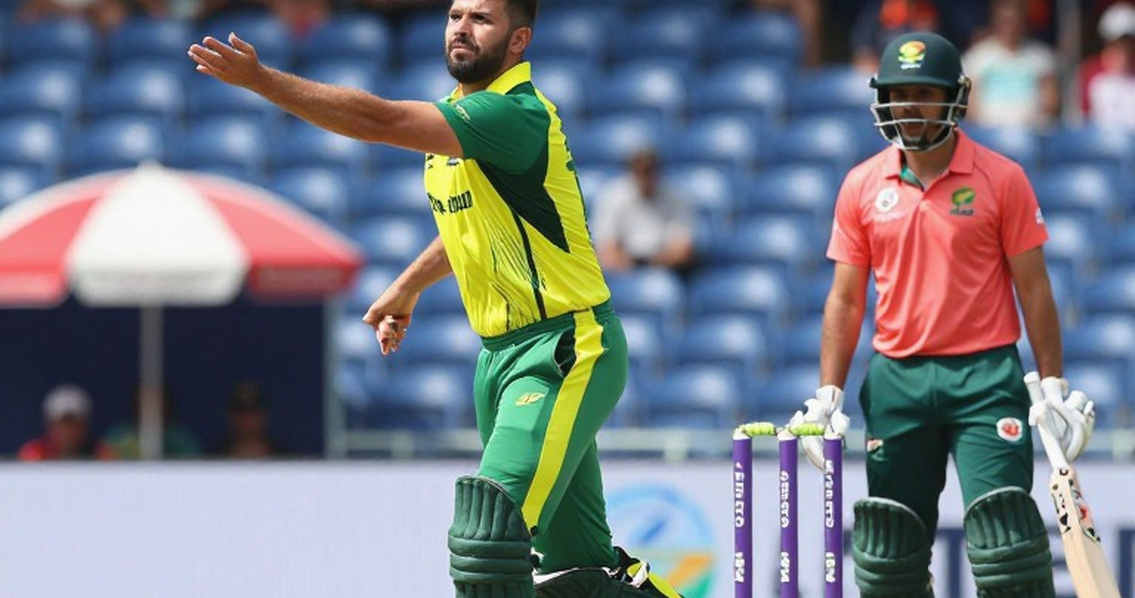
The third fact is age. Sanvir is 30. A so-called career-defining double century at 30 offers limited developmental upside and a short commercial window. Before making any large claim about his profile, the next three to five innings need to be seen. If the same batsman fails to reach double figures across the next four matches, it will be clear that this was an exception, not a new normal.
The format boundary: do not merge Ranji and the IPL
The biggest interpretive challenge in this report is that it places a first-class performance and IPL experience in the same paragraph. Sanvir Singh was associated with Sunrisers Hyderabad in 2026 and 2026. That fact is true in itself, but it has no direct bearing on this innings. The IPL is a T20 league; the Ranji Trophy is a four-day first-class tournament. Their demands, metrics and evaluation criteria are entirely different.
In first-class cricket, a player is judged on the ability to bat long, on technical discipline and on mental patience. In T20, the evaluation is based on strike rate, boundary-hitting ability and the capacity to score quickly under pressure. The same player can succeed in both, but performance in one is not proof of the other. A 375-ball innings is neither a positive nor a negative T20 signal — it is simply irrelevant, because it belongs to a different game.
Similarly, scouts who set a player's value at an IPL auction look at T20-specific evidence. A first-class double century can generate some 'form' chatter in the headlines, but it does not by itself change an auction tier. The distance between a Ranji double century and an IPL contract is not a short one.
Emanjot Chahal: the most interesting profile on show
If any profile in this innings is interesting from a commercial and selection standpoint, it is Emanjot Chahal's. He made 122 off 150 balls, including nine sixes. Nine sixes in a first-class innings is an unusually high count and indicates the presence of T20-style hitting ability. He is also an all-rounder, which makes him more valuable from a team-construction standpoint.
Coach Amit Uniyal has described him as the most exciting allrounder in the state's ranks. That is a quote from a named authority, which makes it the most credible qualitative information attached to this match. But one thing should remain clear: a coach's endorsement plus one century does not establish a player. That assessment demands multi-match verification.
Where Sanvir's innings is a story of slow accumulation, Emanjot's is a story of rapid scoring. Both are part of the same innings, but they mean different things. If Emanjot repeats boundary-heavy innings in the coming rounds and contributes with the ball as well, he will attract the attention of selectors and franchise scouts faster than Sanvir will.
The tactical logic of the declaration
Declaring at 592 for 9 is a calculated decision. Declaring on the second day means the team still has more than three days to bowl Andhra out twice. In the Ranji Trophy points system, a first-innings lead has its own value and an innings victory has its own. The timing of a declaration is set by weighing both.
Had the captain and team management prioritised individual records, they would have let Sanvir bat on. They did not. That shows the team's orientation is towards a result rather than towards statistics. It is a healthy first-class tradition: after batting 156 overs, still preserve time for the rest of the game.
An alternative reading is that there was no haste involved, because 592 was already a sufficient total. Nine wickets had fallen and there was no reason to take risks with the last batsman. Overall, it was a standard, rational and result-oriented decision.
Punjab's pace resources: Umesh absent, a 29-year-old debutant
The structure of Punjab's bowling attack deserves attention. Umesh Yadav transferred to Punjab this season but was not available for this match. The new ball was taken by Gursimran, who was making his first-class debut at the age of 29. At the other end, Harpreet Brar provided left-arm spin.
That combination is a signal in itself. A 29-year-old seamer's debut is not a sign of a youth pipeline; it is a sign of a depth patch. This is not a criticism of the player — Gursimran's debut may be the reward for patience and consistent domestic performance. But from a team-building perspective it indicates that Punjab does not currently have a group of young fast bowlers capable of meeting its pace requirements.
That is a warning for the future. In this match the gap was covered by the batting, because a total of 592 gives bowlers enormous protection. But if Punjab are forced into a match where the batting only performs averagely, the lack of a frontline pace attack will directly affect results. Umesh Yadav's availability and the new-ball composition need monitoring through the season.
Tamil Nadu's parallel display: 571/7 and Pradosh Ranjan Paul's 208
On the same match-day, Tamil Nadu declared at 571 for 7. Three stories stood out. First, Pradosh Ranjan Paul made 208. Second, Ajith Ram made 115 not out. Third, captain Sai Kishore made 36 not out off 35 balls and later took two wickets.
The third point matters most. Sai Kishore's profile appears to be shifting from specialist spinner towards all-rounder. The ability to score quickly in the lower order combined with a bowling contribution is the strongest possible foundation for lower-order strength. Tamil Nadu's innings shows a side with not just batting but a group of multi-skilled players.
Ajith Ram's unbeaten 115 belongs to the same story. A lower-order batsman's century that carries a team to 571 is proof of the depth that is often underestimated. In the Ranji Trophy such innings have a direct effect on the points table, because both a first-innings lead and the psychological pressure of a huge total do their work.
Chandigarh's 48/3: the tier gap is visible
Replying to Tamil Nadu's 571, Chandigarh reached 48 for 3 — still 522 runs behind. That number tells the whole story. The gap between a strong domestic side and a weaker one is not only a gap in names; it is a gap in the ability to absorb scoreboard pressure.
An important conclusion follows. A batting-friendly pitch does not automatically help a weaker team. If 571 is on the board and the other side must bat 500-plus runs behind, even a good pitch becomes a burden. Surviving is a distinct skill, and it is built from technique and morale rather than from conditions.
The truth about the pitch: two venues, one story
This report does not include a pitch report, so no definitive claim can be made. But the available data offers a clear indication. On one day, across two different venues, three batsmen batting to 156 overs and innings of 335 and 375 balls all point to surfaces offering little to seam or spin.
That conclusion is offered with medium confidence, because official pitch information is unavailable. It means the big totals of this round should not be read as a normal batting standard. When factors like weather, moisture or grass change in the next round, how much of that batting depth survives remains to be seen.
Governance: no controversy
There is no rule dispute, no disciplinary issue and no integrity crisis in this report. Ranji group-stage matches are played without DRS, which is standard practice and should not be treated as a controversy. The result is being decided purely by on-field performance.
The only governance-relevant fact is Umesh Yadav's transfer to Punjab. Movement of players between states under BCCI domestic transfer rules is routine and involves no irregularity. But it has a practical effect: the balance of a pace attack shifts, strengthening one side immediately while the side losing the player may show a gap for a while.
Risk: three big interpretation traps
The first and biggest risk is interpretation, not the match. The headline says Sanvir's double century powered Punjab to 592. That is true, but it is not a representative picture of his career. One century in seven years followed by a sudden 375-ball double century should not be called a level change. The correct conclusion is that this is an outlier innings awaiting confirmation from the next several innings.
The second risk is format mixing. The report places a first-class double century alongside IPL experience in the same breath. A reader may naturally connect the two and assume something will change in the IPL. That connection is false. The right approach is to keep every judgement in its format bucket and draw no T20 inference from this innings.
The third risk is pitch bias. Two enormous innings at two venues on the same day indicate a round that favoured batsmen. Treating the team depth shown here as a natural and permanent strength would therefore be wrong. If pitches offer more help next round, that same depth will be evaluated differently.
Five signals to track
First, Sanvir Singh's next three to five innings across different venues. Sustained form around or above forty would suggest a level change; a return to single figures would confirm the outlier reading.
Second, Emanjot Chahal's coming innings — strike rate, six counts and bowling figures. Repeated boundary-heavy innings plus an all-round contribution would rapidly lift his selection profile.
Third, pitch reports across this Ranji round — whether other venues also produced huge totals. If they did, this is a batting round, not a single pitch.
Fourth, Punjab's pace availability — Umesh Yadav's return and the new-ball combination. This will determine whether Punjab can take twenty wickets against stronger sides.
Fifth, the consistency of Tamil Nadu's all-rounders. If Sai Kishore and Ajith Ram keep contributing with both bat and ball, Tamil Nadu's knockout credentials grow stronger.
Glossary
- Ranji Trophy: India's premier domestic first-class competition, contested by state teams; matches run up to four days under first-class rules.
- Declaration: the batting captain voluntarily ending the innings to accelerate a result.
- First-class cricket: the Test-format tier, with two innings per side; distinct from List A and T20, and performances are not cross-comparable.
- 375-ball innings: the batter faced 375 legal deliveries — the mark of patient first-class anchoring, not T20 strokeplay.
- Sixth and seventh-wicket partnership: stands between the batsmen at positions six and seven, typically a lower-middle-order rescue; here 272 and 154 runs.
- Boundary share: the proportion of a batsman's runs coming in fours and sixes; a low share indicates heavy running and a patient tempo.
- All-rounder: a player of starting quality with both bat and ball, the scarcest and most valuable role in team construction.
- IPL scouting: franchise talent-identification networks that watch domestic matches for T20-suitable profiles and weigh T20-specific evidence far above first-class records.
Editorial note
This analysis is based on public information and the facts stated in the report. It should be read as sports information only. Performances from a single match are small-sample data, and no conclusion about a player's international or T20-level ability should be drawn from them. Sporting outcomes are uncertain, and one innings does not determine a career.