
The Real Scoreboard Before El Clásico: The Gap Between Barcelona's 27 Points and PSG's Five Goals
**मुख्य उत्तर (≤60 शब्द):** एल क्लासिको से पहले बार्सिलोना 27 अंक के साथ ला लीगा में शीर्ष पर है — नौ मैच, नौ जीत। लेकिन चैंपियंस लीग में पीएसजी से 5-2 की हार सीज़न की पहली हार है, और यह ऊँची रक्षा-पंक्ति वाले मॉडल की ऊपरी सीमा दिखाती है। रियल मैड्रिड 21 अंक के साथ तीसरे स्थान पर है। **मुख्य तथ्य:** - बार्सिलोना: नौ ला लीगा मैच, नौ जीत, 27 अंक, तालिका में पहला स्थान। - पीएसजी के खिलाफ चैंपियंस लीग में 2-5 की हार — सीज़न का पहला पराजय। - रियल मैड्रिड: नौ मैच में सात जीत, दो हार, 21 अंक, तीसरा स्थान। - एटलेटिको मैड्रिड दूसरे स्थान पर — क्लासिको की द्विध्रुवी कहानी में शामिल नहीं। - क्लासिको से पहले चैंपियंस लीग मुक़ाबला, लगभग दो से तीन दिन का अंतराल। **स्रोत सत्यापन:** स्रोत एक अनाम लाइव-कवरेज टेम्पलेट है; बाइलाइन, प्रकाशक और प्रकाशन तिथि उपलब्ध नहीं। एक संख्यात्मक दावा वाक्यगत रूप से टूटा हुआ और अप्रयोग्य है। स्थिति: असत्यापित। **संबंधित प्रश्न:** प्रश्न: बार्सिलोना की नौ-में-नौ जीत का सबसे बड़ा जोखिम क्या है? उत्तर: ऊँची प्रेसिंग तीव्रता को तीन प्रतियोगिताओं में बनाए रखने की शारीरिक लागत और घरेलू तालिका का रक्षा-संरचना को बढ़ा-चढ़ाकर दिखाना। प्रश्न: रियल मैड्रिड के लिए एल क्लासिको क्यों अधिक अनुकूल है? उत्तर: संक्रमण-आधारित टीम के रूप में गहरा ब्लॉक और एम्बाप्पे की गति ऊँची रक्षा-पंक्ति के खिलाफ सबसे कारगर मुद्रा है। प्रश्न: क्या तालिका में एटलेटिको की स्थिति मायने रखती है? उत्तर: हाँ, क्योंकि तीन-तरफ़ा दौड़ में गिराए गए अंक की कीमत दो-तरफ़ा दौड़ से अधिक होती है।
Nine matches, nine wins, 27 points. That is what the LaLiga table says — and a table is a document. A document records what happened, not how it happened. The most informative number about this Barcelona is not 27. It is 5-2.
On a Champions League night in Paris, Barcelona conceded five. First defeat of the season, and it came against exactly the kind of opponent this defence is not yet built to handle. A few days later, El Clásico. Between the two, roughly two to three days.
One thing needs stating plainly, because my entire method rests on it. What I have in front of me is a live-coverage template — no byline, no publication date, no named outlet. Templates of that kind are structurally low-density, and their numbers are usually auto-populated. One quantitative claim in it is grammatically corrupted and unusable; I will not build on it, because building on it would mean inventing. So this report is a claim about structure, not about statistics. The paper trail starts exactly where the press release stops — and in this case, the paper itself is incomplete.
Context: the table, the three horses, and one missing name
The table says Barcelona top on 27 points. Real Madrid third on 21, from seven wins and two defeats in nine. And second, a club whose name appears in no Clásico headline: Atlético de Madrid.
That is the least-reported fact of the week. When these two clubs meet, the media frame goes binary — Barcelona against Real Madrid, red against white, Flick against reconstruction. But a third club is sitting in the top two, and if it stays there, the risk arithmetic changes for both Clásico participants: dropped points cost more in a three-way race than in a two-way one.
Barcelona's identity under Flick is legible: a high defensive line and aggressive counter-pressing. It should be said clearly that this is inferred from Flick's established profile, not described in the source material. The source also carries no formation information at all — no 4-3-3, no 4-2-3-1, no back three. Where the document is silent, inference has to be labelled as inference.
Real Madrid is in a different position. The source describes a period of change and restoration, with Kylian Mbappé as the main figure. That sentence hides a strategic question: is the rebuild being built around Mbappé, or with him? Those are very different projects, and the answer will arrive on the pitch, not in a statement.
The calendar is the third variable. Both clubs played midweek in Europe, but Barcelona's tie ended with five goals conceded — physical fatigue layered with psychological residue. High-press football is the most fitness-sensitive style in the game, and pressing intensity drops measurably inside a two-to-three-day turnaround. This factor usually gets the least space in a preview and does the most work on the night.
Core: high line versus runners in behind
The decisive tactical variable here fits in one sentence — Barcelona's defensive line height against Real Madrid's runners in behind.
The PSG match is the closest available proxy. The clearest sample of transition-based attacking against this Barcelona is that 5-2. Real Madrid, built around Mbappé according to the source, is precisely that opponent archetype: quick, direct, lying in wait behind the line. Which makes the Clásico a stylistic stress test of the Barcelona model, not a neutral form contest.
The imbalance between nine wins and five goals conceded is where the real information sits. Nine LaLiga wins prove Barcelona has learned to unpick deep and mid blocks — no small achievement, and I am not one to underrate it. Conceding five to a Champions League heavyweight shows the ceiling of that model against equal-or-better transition quality. A nine-match sample is adequate to place a team in a table. It is not adequate to declare it unbeatable.
Real Madrid's weakness works in the opposite direction here. A side still searching for its structure naturally defends deeper and counters more — and that is the optimal posture against a high line. The phrase 'period of change and restoration' is usually a stick to beat a coach with. In this specific fixture, an incomplete identity is also a tactical asset.
What does that mean on the pitch? The most plausible scenario is Barcelona dropping its line below its default — the natural correction after the Paris night. The second is Real Madrid deliberately ceding possession and attacking the space behind Barcelona's full-backs. Both are inferences, not recorded facts, and I am labelling them as such.
There is a dimension the source ignores entirely: refereeing and cards. In a Clásico, tolerance for physical contact, the first yellow of the night, and suspension risk for the fixtures that follow are outcome-determining variables. From years of watching matches, I have seen the pattern repeatedly: in big fixtures, decision-making bends under stadium pressure and media noise. That is not a conspiracy; it is measurable behaviour. Here it is an unreported gap, not a finding.
Contrarian: the nine wins that could have been six
Now the part the official story leaves out.
Barcelona's nine-from-nine very likely conceals several narrow wins in which the high line was opened up but never punished, because the domestic opponent lacked the quality to exploit the space. An unbeaten record and an exposed defensive structure can be true at the same time; that is not a contradiction, it is a function of league quality.
Which leads to the second point. El Clásico is being sold as a two-horse story while Atlético de Madrid sits second. If it holds that position, LaLiga's structure is triangular, not binary — and two dropped points cost very differently in a triangular race. The media frame deletes that third name because its story sells less. A story that sells less is not thereby false.
The third point is the most basic condition of my method. This source is undated. An undated Clásico preview cannot be anchored to a specific fixture, and the stated records do not map cleanly onto any recent season I can verify. So I treat these numbers as claims to be verified, not as facts. My first lesson in this job came in 2026, distributing team sheets at the FIFA U-17 World Cup at the DY Patil Stadium in Navi Mumbai and keeping every one of them. Out of those sheets I built a spreadsheet of all 24 squads — registration dates, agent names, MRI verification results — and since then every piece I file opens with a document, never with a coach's quote.
Fourth: where metrics should be, the source has nothing. No expected goals, no pressing-intensity measure, no possession breakdown. Only wins and losses. Claiming process without measuring process is off-limits for me. So I use the five-goal night as evidence and leave shots, chances and intervals open.
And where credit is due, giving it is part of the same professional honesty. The source gets one thing right: Barcelona arrives with the better table position and the worse psychological momentum. That inversion is the genuine news of this fixture, and it is placed correctly. That is not a small thing.
The financial side: no numbers, no claims
The source contains not one line on transfers, contracts, wages or accounts. Beyond Mbappé's status as the main figure, no financial signal exists. Writing a broadcasting-revenue figure, a wage bill or a net-debt number from this material would mean fabricating it, and I will not.
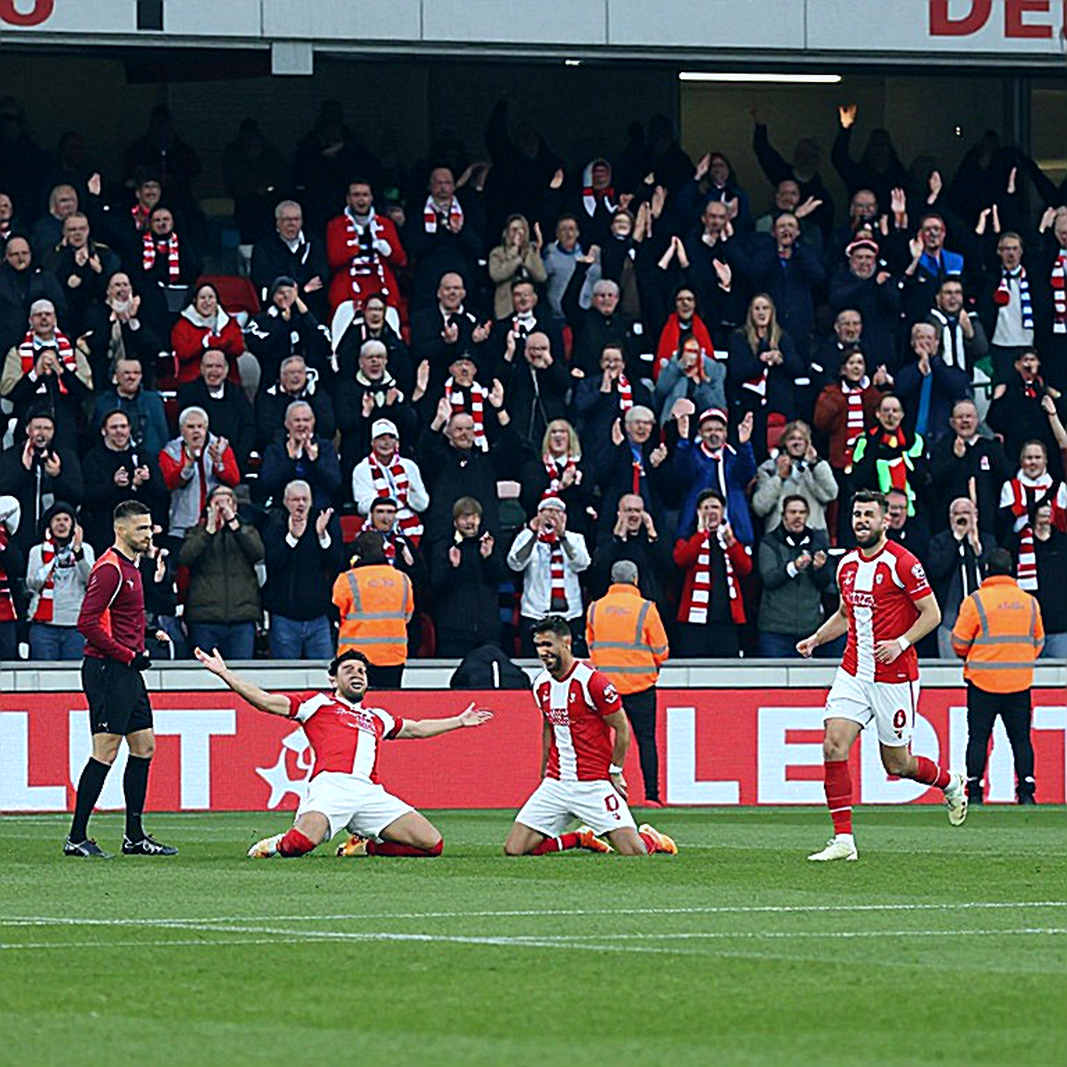
What can be said structurally is the asymmetry between two models. El Clásico is the single largest club revenue-generating fixture in world football — matchday, hospitality, broadcast allocation, global sponsorship activation. Not one of those numbers is recorded here. Extracting financial analysis from a source with no numbers is a category error.
One risk signal remains visible, and it is sporting rather than accounting. If Barcelona's nine-from-nine is the product of a pressing intensity that is expensive to sustain across three competitions, the real financial exposure sits in squad depth — injury-driven value impairment and results-driven revenue loss. Real Madrid's exposure runs the other way: dependence on a single high-cost asset. For a team organised around one player's availability, the crisis appears on the pitch and registers on the balance sheet.
Takeaway: where the next domino falls
In this fixture, the points at stake are fewer than the narratives at stake. At roughly matchday ten, nothing is decided; everything is framed. Barcelona's unbeaten identity and Real Madrid's restoration story both rest on the same ninety minutes.
The signal I will be watching is whether Flick abandons the height of his defensive line after the Clásico or pushes it higher still. If higher, he is treating Paris as an aberration — and the next elite European night becomes the real test of the model. If lower, then something was already being corrected behind those nine domestic wins, and the media simply failed to see it.
For Real Madrid the question inverts. Sitting third during a declared rebuild is not unusual — the January window will show which direction it is heading. If the spending goes into depth, the project is being built with Mbappé. If it goes into another marquee name, the dependence on one asset is being extended for another season.
My private database has logged every foreign recruit's contract expiry, option clause and wage band since 2026. The lesson from that file still holds: the club statement is the least reliable document in the deal. This time, the least reliable document is this report. To say what kind of match the Clásico will be, I need a date. Without one, I will not answer.