
Wrestling: The Changing Story From the Mud Pit to the Olympic Mat
संक्षिप्त उत्तर: कुश्ती दुनिया के सबसे पुराने खेलों में से एक है और पहले आधुनिक ओलंपिक से हर संस्करण में शामिल रही है। ओलंपिक में इसकी दो शैलियाँ हैं — फ्रीस्टाइल (पैर पकड़ने की अनुमति) और ग्रेको-रोमन (कमर से नीचे हमला वर्जित); महिला वर्ग में केवल फ्रीस्टाइल शामिल है। भारत ने ओलंपिक कुश्ती में अब तक आठ पदक जीते हैं: के. डी. जाधव (1952 कांस्य), सुशील कुमार (2008 कांस्य, 2012 रजत), योगेश्वर दत्त (2012 कांस्य), साक्षी मलिक (2016 कांस्य), रवि दहिया (2020 रजत), बजरंग पूनिया (2020 कांस्य) और अमन सेहरावत (2024 कांस्य)। भारतीय कुश्ती का आधार अखाड़ा-दंगल परंपरा है, जबकि ओलंपिक मैट पर सफलता के लिए खेल विज्ञान, पोषण, वजन प्रबंधन और पारदर्शी चयन व्यवस्था जरूरी है। मुख्य चुनौतियाँ: सीमित भौगोलिक आधार, भारी वर्गों में कमजोरी, महिला कुश्ती में सुविधाओं की असमानता और प्रशासनिक अस्थिरता। वैश्विक स्तर पर ईरान, रूस, अमेरिका, जापान, क्यूबा और तुर्की प्रमुख शक्तियाँ हैं।
Wrestling: From the Mud Pit to the Olympic Mat
When the oldest competitive sports in human civilisation are listed, wrestling comes first. In ancient carvings, figurines and seals, the image that recurs most often is of two wrestlers locked in combat. From the seals of the Indus Valley to the walls of Egypt and the ancient Olympia of Greece, the sport has stood for the body, strength and discipline. Among modern Olympic sports, wrestling is one of the very few that featured in the first edition of the Games and has remained on the programme ever since.
Yet behind that historic prestige sit two very different worlds. On one side is the akhara of northern India, with its clay, its rituals, its guru-shishya tradition and the social life of the dangal. On the other is the Olympic mat, with its six-minute bouts, high-definition cameras, electronic scoreboards, video review and weight measured to the gram. The tension and the reconciliation between these two worlds is the real story of wrestling today.
This report examines wrestling at three levels: the level of rules and technique, the level of performance in India and around the world, and the level of administration and coaching infrastructure. All three are connected, but each is changing at a different speed. That mismatch is both the root of the sport's internal crises and its greatest source of strength.
The Akhara: Clay, Ritual and Discipline
In almost any small town in northern India, the first sound of the morning comes from the akhara. The clay is prepared with dung, turmeric and water, a picture of Hanuman hangs on the wall, and the day begins with clay applied to the feet and a salute to the guru. This is not merely a training scene; it is a social institution that has taught generations discipline, restraint and physical labour. In the akhara, competence is measured not only by victory but by endurance and self-control.
In villages across Haryana, western Uttar Pradesh, Delhi and Rajasthan, the dangal is not just a competition but a fair. Wrestlers travel from far away, the village gathers, and the winner receives cash prizes and sometimes large gifts in kind. This ecosystem produces the raw material of the sport: children who begin training four to five hours a day at the age of eight or ten. A large part of Indian wrestling has emerged from this informal structure, which has no central register, no scientific calendar and no assured funding.
The most cited example of this tradition is the village of Balali in Haryana, which has produced several international wrestlers. Here the basis of training has been a family tradition in which the coach and the guardian are often the same person. The strength of this model is dedication and continuity; its weakness is personal dependence, in which the absence of a coach, or a rift in relationships, can affect an entire career.
The technical gap between the akhara and the mat is also significant. Grip behaves differently on clay, the impact of a fall is lower, and the method of pinning an opponent depends heavily on body weight. On the mat, speed, balance and the pace of transitions become decisive. A wrestler who dominates in the akhara is not necessarily as effective on the mat, because the entire arithmetic of scoring is different.
This is why Indian wrestling has seen a period of transition over the last two decades. When wrestlers raised on the akhara reached Sports Authority of India centres, national camps and foreign training camps, their wrestling changed. But this bridge is still not fully strong. Access to modern coaching at the district level is uneven, and talent identification still depends, in large part, on chance and family background.
The Science of the Mat: The Rulebook
Olympic wrestling has two styles: freestyle and Greco-Roman. The difference can be put in one sentence. In freestyle, a wrestler may grab the opponent's legs; in Greco-Roman, holding or attacking any part of the body below the waist is illegal. India's identity has been built mainly on freestyle, while Iran, Russia and several Eastern European countries have been strong in Greco-Roman. In women's wrestling, only freestyle is on the Olympic programme.
A bout is contested in two periods, with total mat time of roughly six minutes. The main scoring elements are the takedown, the reversal, exposure and the fall. To counter passivity, a thirty-second clock is used, under which failure to attack within the stipulated time costs points or position. A bout can also end early on technical superiority. The purpose of these rules is the same: to make the sport fast, clear and legible to the spectator.
In men's freestyle, the Olympic weight classes are 57, 65, 74, 86, 97 and 125 kilograms; in Greco-Roman, 60, 67, 77, 87, 97 and 130 kilograms; and in women's freestyle, 50, 53, 57, 62, 68 and 76 kilograms. This structure is not permanent and has changed repeatedly across Olympic cycles, which directly affects a wrestler's career planning. A wrestler who comes close to an Olympic medal in one class must start again from zero when the classes change, a problem Indian wrestlers have repeatedly faced.
Another, less discussed aspect of the rules is video challenge and refereeing. In modern bouts one or two points decide medals, so the role of the referee and the review system is under enormous pressure. Athletes and coaches must read the rulebook closely, and disputes over results are frequent. This also feeds the criticism that the outcome of a wrestling match is sometimes decided by the decision-making process rather than by the wrestling itself.
India's Olympic Legacy
India has won eight Olympic medals in wrestling, and their distribution tells the story of the country's wrestling journey. The first came at the 2026 Helsinki Games, when K. D. Jadhav won bronze in the bantamweight class, one of independent India's earliest Olympic medals. Yet a long gap followed, during which Indian wrestling did not come close to an Olympic podium.
That drought ended at Beijing 2026, when Sushil Kumar won bronze. Four years later at London 2026 he won silver and Yogeshwar Dutt won bronze. Then at Rio 2026 Sakshi Malik won bronze and proved that Indian wrestling was not confined to the men's draw. At Tokyo 2026, Ravi Dahiya won silver and Bajrang Punia bronze, and at Paris 2026 Aman Sehrawat won bronze.
A clear pattern emerges from these numbers: India's wrestling medals have come from a handful of states, a handful of akharas and a handful of families and training groups. This concentration should be viewed in two ways. Positively, a successful model shows others the path and provides an example worth copying. Negatively, talent from the rest of the country remains outside that tradition, and the medal count stops rising beyond a point.
The second pattern concerns weight classes. India's performance has been relatively better in the lighter and middle classes, while the heavier classes have been weaker, dominated by countries such as Iran, Russia, Turkey and Cuba. The reason is not only body type but also the shortage of the specialised nutrition, strength training and long-term planning that the heavier classes demand.
The third pattern is generational. In every Olympic cycle India has had one or two leading names, but the level immediately below them has often looked empty. This means the balance between individual talent and institutional support has not been achieved. When a star wrestler is lost to injury or controversy, no ready replacement is found.
Women's Wrestling: Rapid Rise, High Walls
Indian women's wrestling has been the fastest-moving story of the past decade. Sakshi Malik's bronze at Rio 2026 pushed the sport into mainstream domestic conversation, and Vinesh Phogat, Antim Panghal and others followed with medals at Asian and world level. Women's wrestling is now becoming an acceptable choice for families, which is a social change in itself.
But the challenges have grown just as quickly. The biggest is weight management. Competition in the lighter classes is extremely tight, and athletes must be within the weight limit before a bout. This process is physically risky and requires a professional nutritionist. In India, access to such specialists is limited and many wrestlers still cut weight through traditional methods, which affects both performance and health.
The second challenge is structural. Women wrestlers often have to fight for space in training centres originally built for men. Access to coaches, physiotherapists and psychological support is also uneven. The third challenge concerns safety and dignity, which has been the subject of a nationwide debate in recent years.
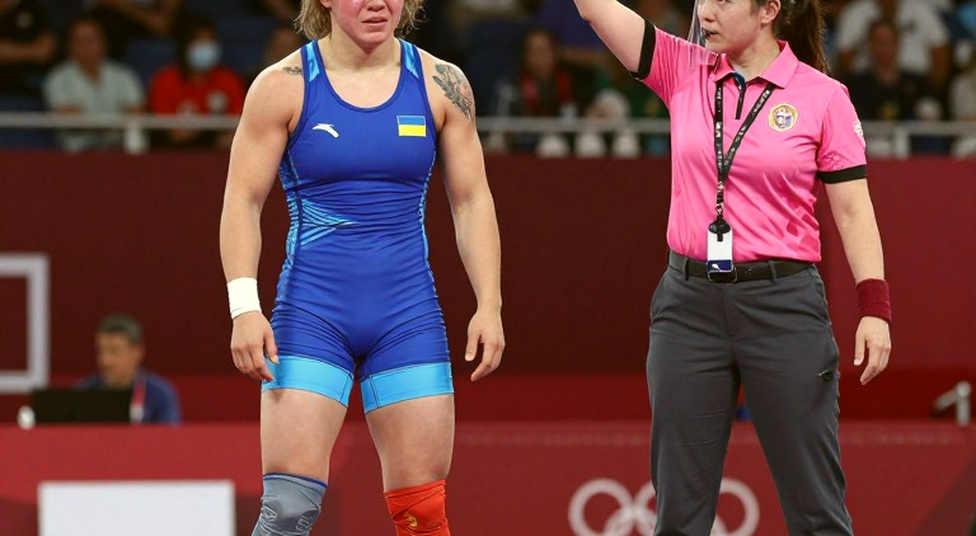
At Paris 2026, one incident brought these issues into global discussion. A leading Indian woman wrestler reached the final and was then disqualified for exceeding the weight limit. The episode is a reminder of the sport's absolute rule on weight, and also of how essential institutional support for weight management is.
The Global Picture: From Iran to Japan
Wrestling's global geography is highly diverse, and no single country dominates it. Iran treats wrestling as a matter of national pride and has performed consistently at the highest level, especially in freestyle and Greco-Roman alike. Russia and its Caucasus regions, Dagestan and North Ossetia in particular, have functioned as a vast laboratory of the sport, producing world-class wrestlers year after year. The United States has been strong in freestyle thanks to its powerful collegiate system, whose pipeline is considered the most organised in the world.
In women's wrestling, Japan occupies a category of its own. Wrestlers such as Saori Yoshida and Kaori Icho set standards that remained beyond challenge for decades. Cuba, Turkey, Georgia, Azerbaijan, Mongolia and China have also stayed in medal contention in every cycle. In Greco-Roman, the name of Mijain Lopez will remain among the brightest in the sport's history: the wrestler who won five consecutive Olympic golds.
The meaning for India is clear. Winning medals requires more than domestic talent; it requires sustained international exposure and experience of different styles. Foreign training camps and international tournament entries have become routine, but the benefit is still largely confined to a handful of top wrestlers.
Physiology, Injury and Weight Management
Wrestling is a contact sport, and its greatest physical stress falls on the joints. The knee, shoulder, hip and neck are the most frequently injured areas. The risk of skin infection on the mat is also real, because sweat, close contact and shared surfaces arrive together. That is why international rules on hygiene are strict and skin checks are conducted before bouts.
In India, awareness of these aspects has grown, but provision is uneven. Large centres offer physiotherapy and rehabilitation, while at district and rural level such support is often absent. Many wrestlers compete while injured, turning a minor problem into a long-term one.
Modern training involves separate cycles for strength, power, speed and flexibility. Weight management is now treated as a year-round plan rather than a task for the days before a bout. Teams that adopt this model look fresher and faster on the mat. Those that do not often appear weak at decisive moments, despite having talent.
Administration, Selection and Controversy
India's biggest wrestling debate has moved in recent years from the field of play to the field of administration. In 2026, some of the country's most prominent wrestlers held a public protest demanding action on their complaints and on the functioning of the national federation. The federation was subsequently suspended internationally, and the matter reached the courts. The administrative uncertainty affected athletes directly, because selection, camps and international participation were disrupted.
The controversy exposed an old weakness: the lack of transparency and accountability in sports administration. When the basis of selection is unclear, athletes lose trust and some talent leaves the sport. When the grievance mechanism is not independent, athletes see public protest as the only route, which damages both the sport's image and its sponsorship appeal.
The direction of a solution emerges from the same controversy. Athletes should have guaranteed representation in decision-making, selection committees should work on published criteria, and an independent mechanism should handle complaints. Several countries already have these arrangements and have kept their sport insulated from political turbulence.
The Road Ahead
The first step is at the grassroots. Modernising akharas at district and block level, training coaches and providing basic medical support is essential. The second step is to institutionalise sports science, including nutrition, rehabilitation and mental health. The third is to increase investment in women's wrestling, where India has the largest untapped potential.
The fourth step is administrative stability. The cycle of changing rules, suspension and reinstatement is the most damaging thing for athletes. A stable calendar and a clear selection policy may prove more effective than any new scheme.
Finally, wrestling must carry both of its roots together. The akhara tradition is the soul of this sport, and the Olympic mat is its global identity. Countries that build a strong bridge between the two win medals consistently. India has both; what it needs is to make that bridge part of the system.