
होमBadmintonThe Paris final is a contest of numbers, not narratives: Sindhu faces An Se Young's 10-0 head-to-head
Badminton
The Paris final is a contest of numbers, not narratives: Sindhu faces An Se Young's 10-0 head-to-head
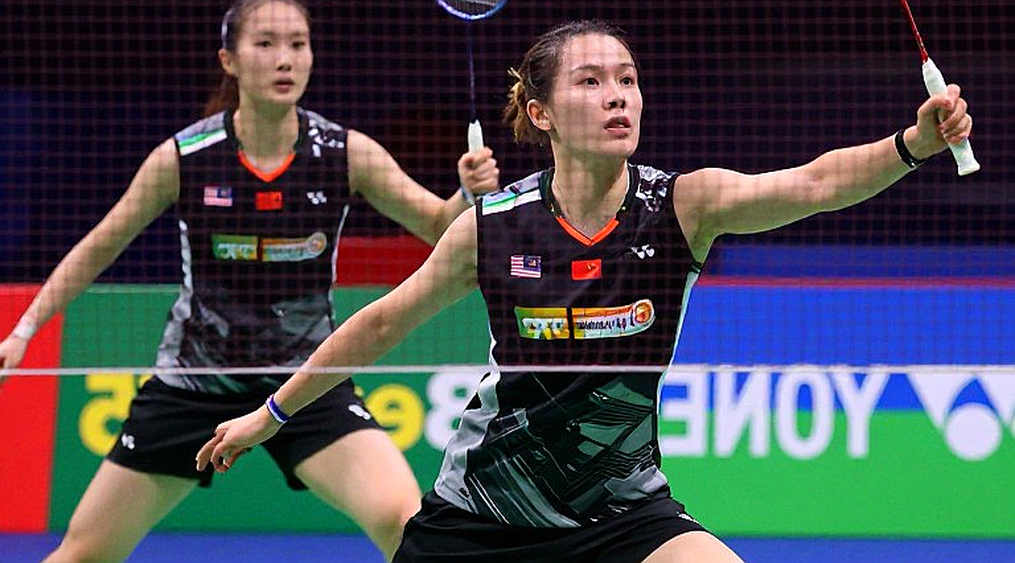
BWF फ्रेंच ओपन 2026 का महिला एकल फाइनल 25 अक्टूबर 2026 को पेरिस के Arena Grand Paris में भारतीय समयानुसार शाम 3:30 बजे पीवी सिंधु और एन से यंग के बीच खेला जाएगा। आमने-सामने के रिकॉर्ड में कोरिया की एन से यंग 10-0 से आगे हैं और इस सीजन सात टूर्नामेंट में छह खिताब जीत चुकी हैं; उनकी एकमात्र हार मार्च में ऑल इंग्लैंड में वांग झियी के खिलाफ थी। सिंधु (33 वर्ष, 179 सेमी) का खेल आक्रामक और छोटी रैली पर निर्भर है, जबकि एन से यंग (24 वर्ष, विश्व नंबर 1) रक्षात्मक नियंत्रण और लंबी रैली पर टिकी हैं। सिंधु ने सेमीफाइनल में हिना अकेनी को 21-10, 20-22, 21-16 से 73 मिनट में हराया, जिससे फाइनल से पहले थकान का नकारात्मक अंतर बनता है। उपलब्ध स्रोत में स्मैश गति, रैली लंबाई, नेट-जीत दर या सिंधु की वर्तमान रैंकिंग का कोई आधिकारिक आंकड़ा नहीं है, इसलिए तकनीकी दावे गुणात्मक अनुमान हैं। संरचनात्मक रूप से एन से यंग प्रभावी पक्ष हैं; सिंधु की संभावना वेरिएंस और दबाव-मुक्ति में है।
Paris: On Sunday, 25 October 2026, PV Sindhu and An Se Young will meet at Arena Grand Paris for the BWF French Open Super 750 women's singles title. The match starts at 11:00 local time (15:30 IST) and, on paper, looks one-sided. The real story, however, lies in the gap between the numbers and the possibilities. This is Sindhu's second Super 750 final of the season, and her opponent is the player who has won six of seven tournaments this year and lost only once.
The head-to-head reads 10-0 in An Se Young's favour. This will be their 11th meeting. In both encounters this season, the Korean won in straight games. So the question is not whether Sindhu can win — it is whether a 33-year-old Indian player has any concrete tactical weapon to bridge that gap. On the available evidence, the direct answer is no.
Sindhu's semi-final win is interesting precisely because it displays her full volatility fingerprint. Against Japan's Hina Akechi she took the opening game 21-10, lost the second 20-22, and closed out the decider 21-16 — a 73-minute match in which the final six points went her way in a row. That profile belongs to a player whose peak level is still available, but not holdable for 60 to 70 minutes. The 21-10 opening game is one match's sample, not a trend.
Technically, this is not a skills-gap contest but a cost-transfer problem. Sindhu's game is attacking — 179 cm of height, a high contact point, steep smashes. That style needs short rallies. An Se Young's style is the exact inverse: defensive control, drop shots, long rallies. The longer the Korean drags the rallies, the more the expected value shifts to the lower-error player. That is the central tension of this final.
The immediate consequence is fatigue. Sindhu played a three-game, 73-minute match on Saturday with the final less than 24 hours away. No official data on the duration or cost of An Se Young's semi-final is available, but her style is economical even in long rallies. At 33, the cost curve of explosive repeatability rises steeply — that is a general physiological rule, not the verdict of a single match.
The current scoring format also favours the lower-error player. Point on every rally, best-of-three, a two-point margin requirement — the structure punishes error variance more than it rewards peak shot quality. To win, Sindhu will have to keep her error rate abnormally low, which is the hardest task within her style.
A popular narrative holds that Sindhu should 'draw inspiration' from Wang Zhiyi, the only player to beat An Se Young this season — at the All England in March. But that is a story, not a blueprint. There is no description anywhere of which serve pattern, which length control, which defensive shape Wang used to contain the Korean. Without a mechanism, the predictive value of 'inspiration' is close to zero.
The real tactical route is different. Sindhu needs to front-load game one with high tempo and aggressive third and fourth shots, putting scoreboard pressure on before rally length settles. She must prepare to absorb pressure on her backhand rear corner and body-smash line — the standard pattern against tall attackers. And she must avoid the second-game wobble that surfaced in the semi-final as 20-22; if the hall's shuttle drift repeats, expect a similar dip.
Data honesty matters here too. The available material contains no smash speed, no average rally length, no net-win rate and no error-rate figures for this matchup. Sindhu's current world ranking is not recorded in the source either. The technical claims here are qualitative estimates, not measured facts. Similarly, no data on An Se Young's semi-final is available, which makes any fatigue comparison theoretical.
So what does Sindhu have? Three things. First, the psychological relief of being the veteran with nothing to lose — the pressure sits with the world No. 1, not with her. Second, her height and high contact point, a scarce profile few players can neutralise. Third, the opponent's possible fatigue — if An Se Young's semi-final was also long and the information simply was not made public. All three are variance factors, not proven edges.
The conclusion is clear: this is a high-narrative, low-uncertainty final. An Se Young is the structurally dominant side — a 10-0 record, one loss all season, better error control, and a favourable scoring format. Sindhu's genuine upside lies in variance, fatigue asymmetry and pressure relief, not in any documented tactical edge. This is not a prediction; it is a reading of the structure. The shuttle will fly, and then we will know.
संबंधित खिलाड़ी
अनुशंसित
Insufficient information — source content unavailable2026-11-03
An Se-young's 47th Title: Behind the Denmark Open Win Lies an Ankle Crisis and a Record Chase2026-10-22
Paris Final: Sindhu's First-Game Win Is Half the Truth; the 23-42 Gap Is the Real Story2026-10-30
An Se-young's 47th Title: The Denmark Open Scoreboard That Lies, and the Shuttle Tape That Doesn't2026-10-22
Denmark Open: An Se-young's 47th Title Is Not Just a Record, It's a Math of Ankle Pain and a 44-Match Rhythm2026-10-22
The Paris final is a contest of numbers, not narratives: Sindhu faces An Se Young's 10-0 head-to-head2026-11-01
Tanvi Patri's Youth Olympic Final: A First Step, Not the First Medal2026-11-05
Behind the Dakar mosquito story, the real question: six weeks, three continents, a fifteen-year-old named Tanvi Patri2026-11-07
अनुशंसित
Tanvi Patri's Youth Olympic Final: A Historic First Step, Not a Miracle Under Pressure2026-11-05
Zero Facts, Full Hazard: The Empty Cell in Badminton's Data Chain That Exposed the System2026-11-10
The Invisible Scaffolding: Why Indian Badminton's Biggest Story Never Reaches the Scoreboard2026-11-11
Insufficient information — source content unavailable2026-11-03
The Empty Payload: In Badminton's Data Room, the Most Dangerous Thing Is Not a Wrong Number — It's a Missing One2026-11-09
The Paris final is a contest of numbers, not narratives: Sindhu faces An Se Young's 10-0 head-to-head2026-11-01
French Open Final: Sindhu's Problem Is Rally Length, Not Skill2026-10-25
The 47th Title Is a Count; the Taping in Game Three Is the News2026-10-22